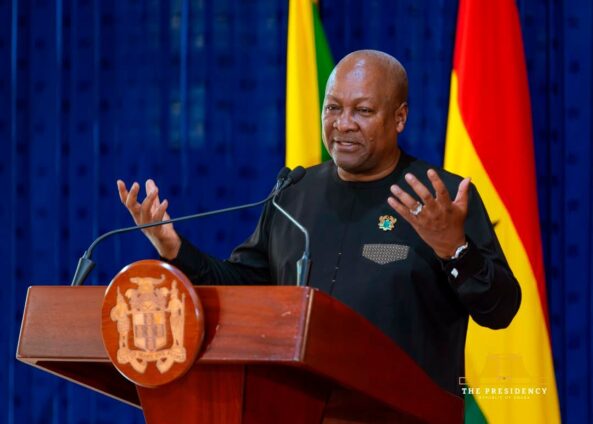
President John Dramani Mahama has urged three newly sworn-in Justices of the Supreme Court to uphold the Constitution, protect judicial independence and ensure that their decisions strengthen public confidence in Ghana’s justice system.
He described membership of the Supreme Court as one of the highest and most demanding responsibilities in Ghana’s constitutional democracy, noting that the Court’s authority ultimately depended on the confidence and trust of the Ghanaian people.
“The authority of the Court does not rest on force or political power. It rests on the confidence and trust of the people,” the President said, stressing that cases must be determined independently, impartially and strictly according to law.
President Mahama said the three new justices brought complementary experience that would strengthen the country’s highest court.
The President said her elevation reflected her competence, discipline and dedication, while urging her to contribute to the clarity, consistency and development of Ghanaian jurisprudence.
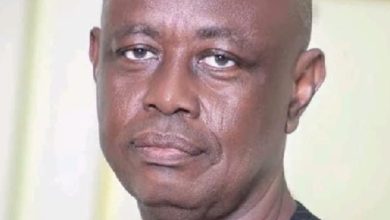
Justice Asante was praised for combining national judicial experience with regional expertise gained from his tenure as President of the ECOWAS Court of Justice.
According to Mr Mahama, his exposure to issues including regional integration, treaty obligations, human rights and the relationship between domestic and international law would bring an important perspective to the Supreme Court.
Mr Fawson, who joins the bench from private legal practice and previously served as President of the Ghana Bar Association, was described as bringing decades of practical experience from the legal profession.
The President noted that his transition from advocacy to adjudication would require a fundamental shift in responsibility, with the judge required to rise above competing interests and determine cases on the basis of law, evidence and justice.
President Mahama reaffirmed his commitment to judicial independence, describing it not as a privilege for judges but as a safeguard for citizens whose rights may depend on impartial decisions, particularly in politically sensitive or difficult cases.
He, however, stressed that independence must be accompanied by accountability, discipline and fidelity to the judicial oath.
He also called on the judiciary to address delays in the administration of justice, warning that prolonged cases, avoidable adjournments and delays in delivering judgments could undermine public confidence and amount to a denial of justice.
The President urged the judiciary to continue reforms aimed at improving efficiency and accessibility, including the appropriate use of technology.
He said justice must be accessible to all Ghanaians regardless of income, social status or geographical location, adding that the effectiveness of the judicial system should ultimately be measured by how fairly and promptly citizens can obtain justice.
He expressed confidence that their combined judicial, regional and private-practice experience would deepen the Court’s deliberations and contribute to the continued development of Ghana’s legal and constitutional order.