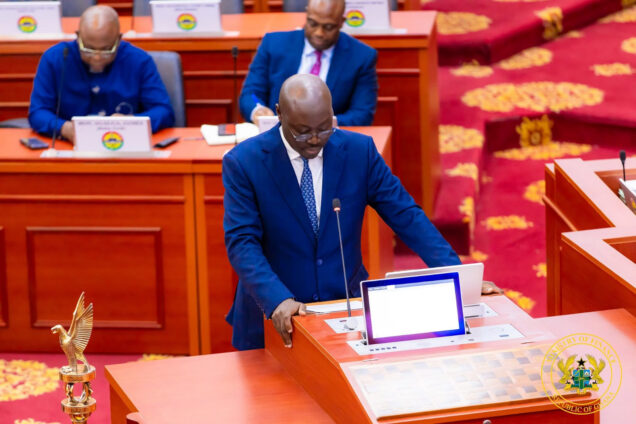
Finance Minister Dr Cassiel Ato Forson says Ghanaians can now breathe a sigh of relief following improvements in the country’s economic conditions, but has urged the nation to use the stability achieved to build a stronger, more productive economy capable of creating jobs and delivering lasting prosperity.
Presenting the 2027 Budget Statement and Economic Policy to Parliament on Thursday, November 12, Dr Forson said the restoration of economic stability and confidence marked a significant turning point in Ghana’s recovery.
He, however, cautioned that the country must not squander the opportunity by returning to the cycles of economic growth and instability that have repeatedly undermined progress.
He stressed that the benefits of economic recovery must be felt in the daily lives of Ghanaians rather than reflected only in improved macroeconomic indicators.
The Finance Minister said successive governments had struggled to sustain economic gains, with periods of modest growth often followed by instability that disrupted households and businesses.
“These boom and bust cycles must cease, Mr Speaker.”
Dr Forson described the 2027 Budget as an important step in Ghana’s economic recovery, with the government seeking to move beyond stabilisation towards expanding production, promoting industrialisation, supporting private-sector growth and creating employment.
He also drew on Ghana’s post-independence aspirations, recalling the vision of the country’s first President, Dr Kwame Nkrumah, who recognised that political independence had to be matched by economic emancipation.
“At independence, Ghana carried the hope of Africa. We had natural and human resources and a place of distinction in the world. Admired and respected by many, a successful Dr Kwame Nkrumah understood that political freedom required economic emancipation,” he said.
He noted that Nkrumah and his generation sought to build an industrialised nation underpinned by reliable electricity, infrastructure, education and effective state institutions.
Dr Forson said the government’s priority was to consolidate the gains from economic stabilisation and channel them into productive sectors to expand opportunities, create jobs and improve living standards.