The government will reduce its primary surplus target from 1.5% to 0.5% of GDP to create fiscal space for investment in productive infrastructure, industries and jobs under its $10 billion New Economy Programme.
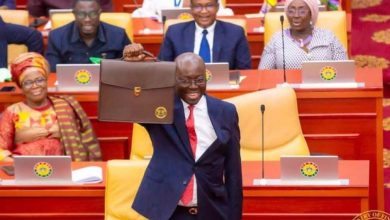
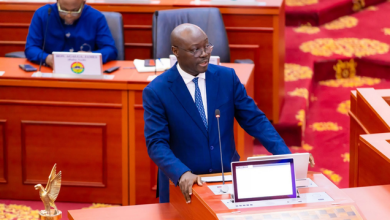
Presenting the 2027 Budget Statement and Economic Policy to Parliament on Thursday, 12 November, Finance Minister Dr Cassiel Ato Forson said the reduction, alongside revenue expected from tax reforms and compliance measures, would provide funding for the four-year programme running from 2027 to 2030.
“The first is to reduce Ghana’s primary surplus target by one percentage point of GDP over the period, creating room for investment in productive infrastructure, industries and jobs,” he told Parliament.
Dr Forson explained that the government would reduce the primary surplus from 1.5% of GDP to 0.5% of GDP as part of two fiscal measures to finance the programme.
The second measure involves revenue expected from tax reforms already approved by Parliament and compliance measures being implemented by the Ghana Revenue Authority (GRA).
“Tax reforms already approved by Parliament and compliance measures already being implemented by GRA are expected to generate 0.5% of GDP,” he said.
He said the two measures would enable government to invest $10 billion equivalent over four years while maintaining macroeconomic stability and protecting the gains made in the country’s economic recovery.
“In 2027, we will invest 1.5% of GDP, equivalent to GH¢30 billion, in the New Economy,” Dr Forson announced.
He said the investment would provide the foundation for economic transformation by supporting business expansion, increasing exports and creating employment opportunities.
The Finance Minister said the programme would be sustained from 2027 to 2030, with government committing to rigorous appraisal and value-for-money assessments for all projects.
“Every project will undergo rigorous appraisal and value-for-money assessment. Our commitments will be budgeted, authorised and transparently reported,” he said.
He added that public funds would be concentrated on strategic assets and public goods, insisting that every cedi invested must contribute to building a stronger economy and improving living conditions.
“Every cedi invested will help build a stronger economy and improve the lives of our people,” he said.
Dr Forson also announced plans to introduce patient capital to give farmers and industrialists sufficient time to invest, produce and generate returns before repayment obligations fall due.
He said government wanted to bring the cost of capital into single digits and make financing more accessible to businesses.
“Our ambition is to bring the cost of capital into single digits and make finance more widely available,” he told Parliament.
He said government would strengthen bank lending, deepen the corporate bond market and create conditions for cheaper, long-term credit.
The Development Bank Ghana, Ghana EXIM Bank and participating financial institutions would also be used to expand financing for productive businesses.
“Affordable finance will translate stability into opportunities. Lower interest rates will translate into credit that businesses can access, afford and repay,” he said.
The Finance Minister said improved access to financing would enable businesses to expand operations and create more jobs, particularly for young people.
He added that the fiscal space created through the government’s discipline would be directed towards irrigation, energy transition, transport, industrial infrastructure, technology, skills and other productive sectors.
Dr Forson said Ghana’s future economic growth must be driven by investment, exports and employment rather than commodity windfalls and debt-financed consumption.
“Ghana’s phase of growth must be investment-led, export-capable and job-intensive,” he said.