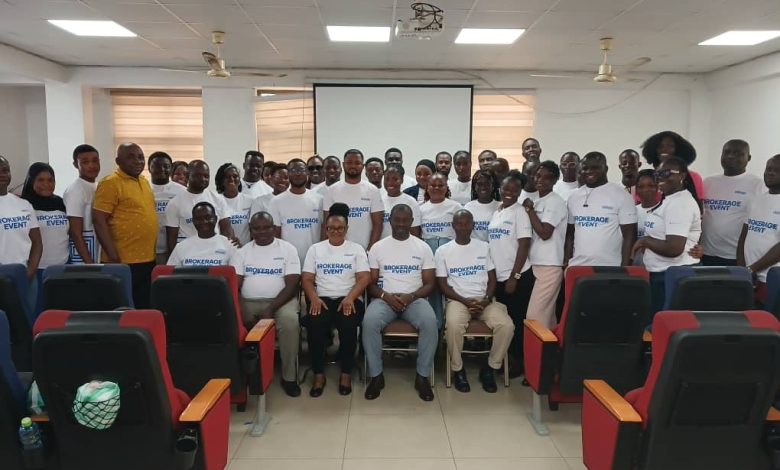
Three Ghanaian universities have successfully completed the pilot implementation of the UNIHUBS Massive Open Online Course (MOOC), an initiative designed to strengthen innovation, entrepreneurship and digital skills among university students.
The participating institutions are Kumasi Technical University (KsTU), Kwame Nkrumah University of Science and Technology (KNUST), and the University of Mines and Technology (UMaT).
The pilot programme, which began in late June 2026 and was completed in July, selected students from the three institutions to participate in an intensive learning programme focused on contemporary entrepreneurship and innovation challenges.
Blended learning combines theory with practical experience
The programme adopted a blended learning approach, combining self-paced online lessons with face-to-face classroom sessions, interactive discussions, practical workshops, case studies, group assignments, presentations and continuous engagement with facilitators.
According to the UNIHUBS project, the approach enabled students to move beyond theoretical knowledge by developing practical competencies applicable to entrepreneurial ventures, innovation ecosystems and professional environments.
The course covered four major thematic areas: business development and execution, technology transfer in higher education institutions, digital marketing, and professional communication.
In the business development module, students explored opportunity recognition, customer value creation, market assessment, business models, strategic planning, financial sustainability and business growth strategies.
The technology transfer component also exposed participants to innovation ecosystems, intellectual property management, commercialisation pathways, prototype development, market validation and strategies for scaling businesses.
Students gain digital, communication and entrepreneurial skills
The digital marketing module equipped students with knowledge in customer segmentation, digital branding, content development, social media marketing, campaign planning and performance analytics.
Meanwhile, the professional communication module focused on oral presentations, teamwork, stakeholder engagement, negotiation, professional writing, conflict management, critical thinking, adaptability, leadership and self-management.
The UNIHUBS project said students responded positively to the pilot, particularly appreciating its practical orientation, quality learning materials and interactive blended-learning sessions.
Participants reported that the programme strengthened their understanding of entrepreneurship, innovation management, digital technologies and professional communication, while also giving them opportunities to collaborate across academic disciplines and tackle real-world challenges.
“The practical orientation of the programme and the interactive approach used during the blended learning sessions were among the key aspects valued by participants,” the project noted in its assessment of the pilot.
Ghana experience to guide wider UNIHUBS rollout
The Ghana pilot also served as an important quality assurance exercise, allowing organisers to assess the relevance, accessibility, usability and effectiveness of the course materials and gather feedback from students and facilitators.
Lessons from Ghana will inform subsequent pilot programmes in Kenya and Tanzania, which are scheduled for September 2026. The experiences from the three countries will contribute to the final refinement of the UNIHUBS MOOCs before their wider adoption across consortium institutions.
The UNIHUBS project said the initiative reflects its commitment to strengthening higher education through innovation, entrepreneurship and digital learning while building stronger links between universities and industry.
“UNIHUBS will continue to create opportunities for students, academics, innovators and industry partners to collaborate in building resilient innovation ecosystems capable of responding to local and global development challenges,” the project stated.
UNIHUBS is an Erasmus+ Capacity Building in Higher Education project funded by the European Union, bringing together universities and innovation ecosystem actors from Africa and Europe to strengthen institutional capacity, digital innovation skills and graduate employability.
Source: Ghana/otecfmghana.com/John Antwi Boasiako