May Day: We’re almost at crisis level on jobs – Organised Labour tells gov’t
Organised Labour has raised serious concerns over Ghana’s worsening unemployment situation, warning that the country is nearing a “crisis level” if urgent action is not taken to address job creation, job quality, and youth unemployment.
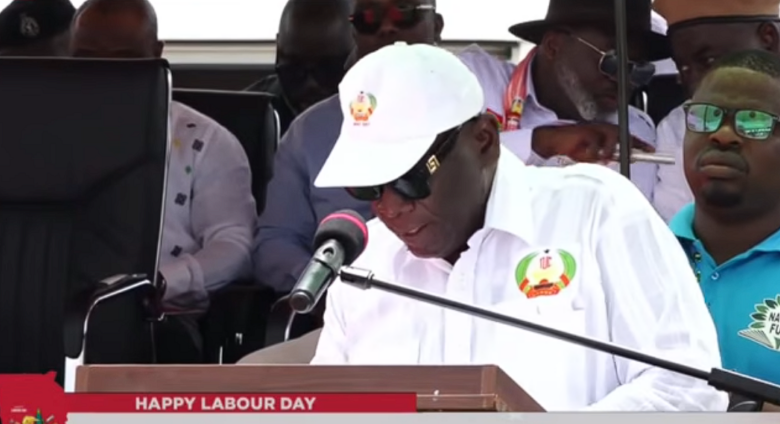
The concerns were contained in a keynote address delivered by the Secretary General of the Trades Union Congress (TUC), Joshua Ansah, during this year’s Labour Day commemoration at Jackson Park, Koforidua, on May 1.
Speaking on the theme “Pivoting to Growth, Jobs, and Sustainable Livelihoods Beyond Macroeconomic Stability,” the TUC Secretary General said Ghana must move beyond economic indicators and focus on whether growth is translating into decent jobs for citizens.
He noted that despite decades of economic growth, job creation has not matched the rising number of educated young people entering the labour market.
He highlighted that many graduates remain unemployed for years after completing school, while others are forced into jobs that do not reflect their qualifications.
“I say with no fear of contradiction that decent employment or lack of it remains one of the most significant economic and social problems in Ghana, and it has the potential to transform into a political problem if it remains unchecked. We are almost at crisis level, Mr. President,” he stated.
Beyond unemployment, the TUC also raised concerns about the quality of existing jobs, pointing to widespread low wages, poor working conditions, and limited social protection.
According to him, many workers are not enrolled in social security schemes and therefore lack pension coverage, while others continue to work long hours in unsafe environments.
He also criticised the increasing trend of converting permanent jobs into fixed-term contracts with reduced benefits, describing it as a threat to job security.
Mr Ansah cautioned that large-scale youth unemployment and underemployment could have serious social consequences if not addressed urgently.
He described the situation as a “waste of human resources” and warned that frustrated, educated unemployed youth could become a destabilising force if the trend continues.
He urged government, employers, and social partners to work together to address the structural challenges in the labour market.
“When we work together, we can ensure that this challenge does not escalate further, and that Ghana fully benefits from its young and educated population,” he said.