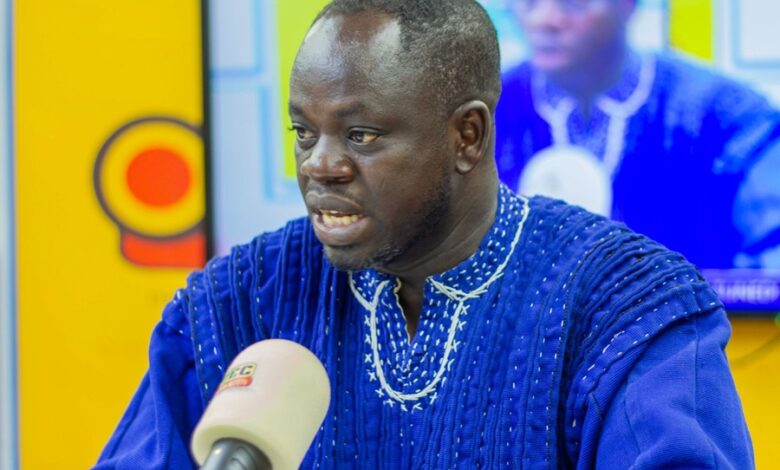
An educationist, Dr. Barnabas Addai Amanfo, has called on the government to reform Ghana’s senior high school boarding system rather than abolish it.
He argued that a blanket policy could create serious challenges for students in rural and underserved communities.
According to him, although the cost of feeding and accommodating students remains a legitimate concern for government, the debate must also consider Ghana’s geographical conditions, road network, transportation system and the distribution of senior high schools across the country.
“The real question should not simply be whether boarding education is expensive. We should also ask whether Ghana has the schools, roads, transportation systems and geographical conditions required to operate a predominantly day-school system,” he said.
Dr. Barnabas Addai Amanfo, a Lecturer at the University of Skills Training and Entrepreneurial Development (USTED) and Research Fellow at IFEST-GHANA, cited the Amansie South District as an example of the difficulties a predominantly day-school system could create for rural students.
He said the district’s 2023 Composite Budget recorded 97 kindergartens, 88 primary schools and 42 junior high schools, but only one senior high school, while less than five per cent of its roads were classified as good and more than 80 per cent were described as poor.
He therefore questioned how students in such communities would cope if boarding facilities were completely removed, particularly during the rainy season when poor roads and unreliable transportation could make daily commuting difficult.
“For such students, boarding is not necessarily a luxury. It may be what makes secondary education practically accessible,” Dr. Amanfo said.
Speaking on Otec FM’s morning show ‘Nyansapo’ on Friday, he also warned that abolishing boarding could simply shift the financial burden from government to parents, as students who currently live on campus could be forced to travel long distances to school every day.
“The government may save money on meals and accommodation, but parents may spend more on transportation,” he said, stressing that the overall cost of an education policy should consider its impact on government, families and society.
Dr. Amanfo further highlighted the role of boarding schools in promoting national integration, saying students from different regions, ethnic groups, religious backgrounds and socio-economic circumstances interact closely and develop relationships that strengthen national cohesion.
“Boarding schools do not only provide accommodation; they also provide an environment where young people interact with people from different backgrounds and develop a broader sense of national identity,” he said.
He proposed a flexible system under which schools in densely populated urban areas with reliable transportation could operate mainly as day schools, while boarding facilities are maintained for schools serving remote communities and those offering specialised programmes that attract students from distant locations.
“Boarding places could also be targeted towards students who genuinely face geographical or transportation difficulties,” Dr. Amanfo said, adding that government should undertake a comprehensive assessment of commuting distances, transport costs, road conditions and school locations before taking a final decision.
“Before we abolish boarding, let us first build the roads, transport systems and school infrastructure that would make its abolition realistic,” he said.
Source: Ghana/otecfmghana.com/Francis Appiah