Asantehene backs government’s mineral policies, says the approach reflects Nkrumah’s vision
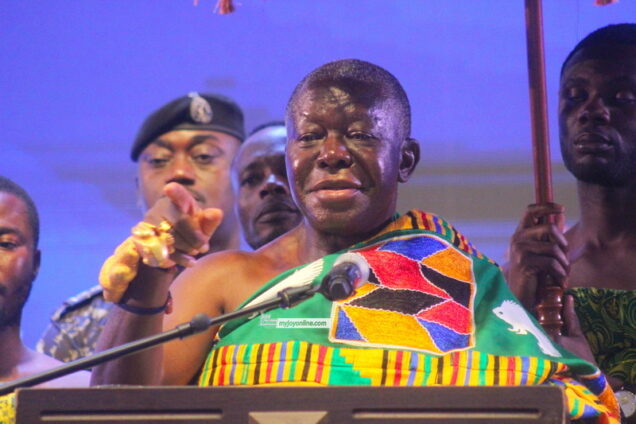
The Asantehene, Otumfuo Osei Tutu II, has backed the government’s mineral policies, including the establishment of the Ghana Gold Board (GoldBod), saying they are helping Ghana take greater control of its mineral resources and retain more value from its gold.
He acknowledged the controversies surrounding GoldBod but maintained that they did not undermine the broader direction of the government’s Reset agenda.
“Over the past year, the contours of the new agenda have become clear. Whatever we make of the minerals in the ground, the mineral policies of the government, and regardless of the controversies surrounding the GoldBod, there can only be no doubt that the nature of the President’s Reset agenda is intact,” he said.
Nana Okyere Kusi Ntrama said the policies demonstrated political courage and brought to mind Ghana’s first President, Dr Kwame Nkrumah, and his efforts to place the country’s mineral resources under state control.
“It reflects the political courage of the kind of which only true heroes are gifted. It takes us right back to the very foundation of our republic, when Dr Kwame Nkrumah sought to bring our minerals under the control of the state and moved to establish a gold refinery in Tarkwa,” he said.
The Minister for Lands and Natural Resources, Emmanuel Armah Kofi Buah, also outlined the government’s plans to reform the mining sector, saying the changes were intended to provide clearer rules for investors, stronger protections for mining communities and a firmer foundation for long-term national development.
In his remarks at the conference, the Minister said Cabinet had approved a revised Minerals and Mining Policy and endorsed proposed amendments to the Minerals and Mining Act for consideration by Parliament.
According to the Minister, the proposed changes address licensing, local participation and community development, areas considered important to improving the management of the country’s mineral resources.
He also pointed to efforts to increase the value Ghana retains from mineral production, particularly gold from the small-scale mining sector.
“The Ghana Gold Board has brought a more organised approach to the purchase and export of small-scale gold,” he said.
“In addition to these efforts, expanding refining, improving assay capacity, and strengthening traceability are important steps towards a more credible and productive gold value chain,” he said.