Dr Cassiel Ato Forson, the Minister of Finance, has announced plans to construct a 1,450-megawatt (MW) state-owned thermal power plant and a 600MW solar power facility, as part of measures to strengthen Ghana’s energy security and support industrial growth.
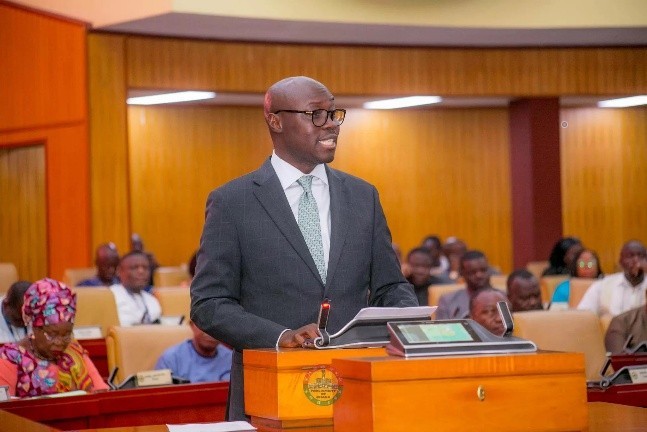
Presenting the 2027 Budget Statement in Parliament on Thursday, November 12, 2026, Dr Forson said construction of the thermal plant at Ekafudzidzi in the Central Region would begin in December 2026.
He said the project would be fully funded and owned by the state, insisting that the government would not borrow to finance its construction.
“We are not borrowing for this project,” he told Parliament.
The facility will require about 150 million standard cubic feet of gas daily from the Sankofa and Jubilee fields.
The government will also construct a fully state-owned 600MW solar power plant, supported by 2,000 megawatt-hours (MWh) of battery storage.
Together, the thermal and solar facilities, alongside the battery storage system, are expected to provide electricity for households and industries, including bauxite and manganese processing, steel production, cement manufacturing and agro-industry.
The Finance Minister said the projects formed part of a broader push towards energy independence, arguing that reliable and affordable electricity was essential to industrial development.
“Energy capacity is economic capacity. It powers growth, jobs, and prosperity,” he said.
Dr Forson further announced that Ghana would phase out all emergency power plants by December 2030, with the new generation facilities expected to reduce the country’s reliance on expensive emergency electricity arrangements.
To improve electricity transmission, the government will commit US$500 million between 2027 and 2030 to modernise the transmission network and reduce power losses.
The investment will support the strengthening of the north-south transmission network, connect new generation facilities to demand centres, facilitate electricity trade within the sub-region and provide reliable power connections to strategic industrial enclaves.
Government also plans to deploy two million prepaid meters to reduce losses within the distribution system.
In addition, Dr Forson said performance-based private sector participation in electricity distribution would be fully implemented by the end of 2027.
The measures, he said, are intended to improve the reliability of electricity supply, lower system losses and provide the power needed to support Ghana’s industrial ambitions and the 24-hour economy.