The Chickens Have Come Home To Roost: When The Accuser Becomes The Accused

There is a peculiar irony in public life when the man who demands the most exacting accountability from others finds himself subjected to the very standards he once insisted upon.
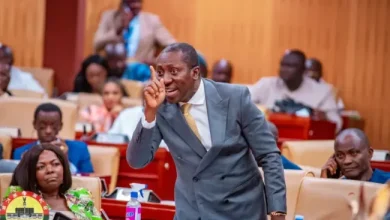
Samuel Okudzeto Ablakwa MP, Ghana’s Foreign Affairs Minister, now faces questions over the GH¢49.72 million expenditure associated with the evacuation of Ghanaians from South Africa.
The Minority has alleged discrepancies in the supporting records and called for an independent audit; Ablakwa, for his part, insists that not a cedi is missing.
The appropriate response is verification, not premature conviction.
But the political irony is unmistakable.
The chickens, it would seem, have come home to roost.
Recall the case of Victor Kusi Boateng.
Even after a regular audit was said to have vindicated him, the demand for a forensic audit persisted, with the attendant cost to the Ghanaian taxpayer.
The message was clear: ordinary audit procedures were not necessarily enough; further scrutiny was warranted to settle the questions raised.
That position may have been defensible in principle.
But a principle does not become less binding simply because its application becomes inconvenient.
If forensic scrutiny was considered necessary in Kusi Boateng’s case despite the reported findings of a regular audit, why should it be objectionable in Ablakwa’s case?
Why should the taxpayer-funded machinery of forensic investigation be considered indispensable for one individual but excessive, unnecessary or politically motivated when the subject is another?
What was demanded for Kusi Boateng must, by the same logic, be available for Ablakwa.
If the standard was forensic scrutiny then, it cannot be reduced to the mere acceptance of ministerial assurances now.
Consistency is the ultimate test of sincerity; anything less exposes accountability to the suspicion of partisan selectivity.
Indeed, the case for independent scrutiny is strengthened, not weakened, by the sums involved.
The evacuation was a humanitarian undertaking, and the urgency of protecting Ghanaian lives is not in dispute.
But humanitarian necessity does not extinguish the obligation to account for public expenditure. Compassion explains why money was spent; it does not, by itself, establish how every cedi was spent.
The documentation must speak, the figures must reconcile, and an independent audit must be permitted to establish the facts
There is a further irony in the rhetoric of the self-styled “son of man.”
The biblical allusion may project moral gravitas, but no title, however evocative, confers exemption from ordinary standards of accountability.
If the expression is invoked as a claim to moral authority, it must invite an even greater willingness to submit to scrutiny, not a lesser one.
And so, with deliberate irony: as it was demanded in the case of Kusi Boateng, so should it be in the case of the “son of man.
” Let the forensic audit proceed, let the taxpayer know its cost, and let its findings be published.
If Ablakwa’s records withstand examination, he will have earned vindication through evidence rather than assertion.
If discrepancies remain, they must be explained and resolved.
The point is not to reverse the presumption of innocence or to pronounce guilt by political analogy.
It is to insist that the rules of accountability must be symmetrical.
A regular audit cannot be treated as insufficient for one person and conclusive for another merely because political loyalties differ.
The deepest moral lesson is this: those who build their public reputations on scrutinising others must be prepared to endure scrutiny themselves.
One cannot monopolise the moral high ground while reserving a different set of rules for oneself.
Ablakwa once demanded answers.
He must now appreciate why others demand answers from him.
The chickens have come home to roost. And the “son of man,” no less than any other public official, must submit to the same test: let the evidence speak.
The Horns of the Altar!!
By Professor Dr Dr Otchere Addai-Mensah,
Department of Medical Diagnostics,
College of Health Sciences, KNUST