The government is targeting real GDP growth of about 8% and an unemployment rate below 8% by 2030 as part of measures to sustain macroeconomic stability and improve access to affordable financing under its New Economy Programme.
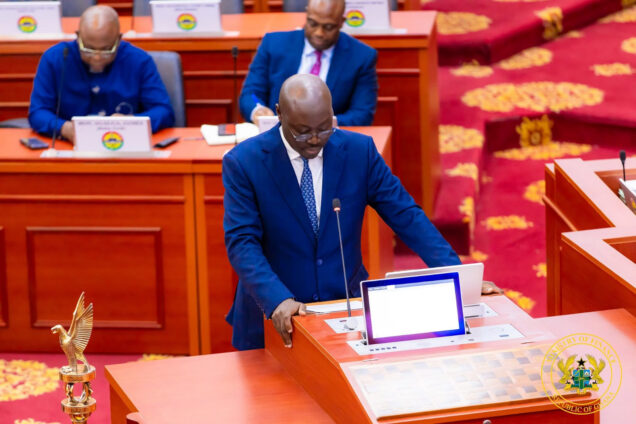
Presenting the 2027 Budget Statement and Economic Policy to Parliament on Thursday, November 12, Finance Minister Dr Cassiel Ato Forson said the government would protect the gains made in economic recovery while directing them towards improving the living conditions of Ghanaians.
He said the government would maintain a positive primary surplus of at least 0.5% of GDP from 2027, keep public debt consistent with 45% of GDP, preserve single-digit inflation and strengthen the country’s external position.
“By 2030, we are targeting real GDP growth of about 8%, unemployment below 8%, and a credible path to investment-grade sovereign credit rating,” he told Parliament.
Dr Forson stressed that achieving an investment-grade sovereign credit rating would require sustained economic performance rather than government declarations.
“Investment-grade sovereign credit rating cannot be conferred in a speech. It must be earned through sustained performance,” he said.
To demonstrate progress towards that objective, he announced plans for an annual investment-grade readiness report to assess the country’s performance across key economic indicators.
The report will cover fiscal performance, debt affordability, reserve accumulation, monetary credibility, financial sector strength, institutional quality and economic diversification.
The Finance Minister said the first pillar of the New Economy Programme, which focuses on macroeconomic stability and affordable finance, was intended to ensure that improvements in the country’s economic indicators translated into accessible financing for businesses.
“Affordable finance will translate stability into opportunities. Lower interest rates will translate into credit that businesses can access, afford and repay,” he said.
He cited the financing needs of small businesses and manufacturers, saying Ghanaian enterprises required credit to support their operations and expand production.
“From the market woman’s second working capital to the manufacturer investing in new machinery, Ghanaian enterprises need financing that supports growth,” he said.
Dr Forson said the government would strengthen bank lending, deepen the corporate bond market and create conditions for cheaper, long-term credit to support productive businesses.
He added that the government would work through the Development Bank Ghana, Ghana EXIM Bank and participating financial institutions to expand access to financing for businesses.
The measures form part of the government’s broader New Economy Programme, which is expected to run from 2027 to 2030 with a proposed investment of $10 billion across eight priority pillars.
The government says the programme will use economic stability as a foundation for expanding production, supporting businesses and creating sustainable employment.