Otumfuo calls for investment in creative industry to boost jobs, wealth creation
The Asantehene, Otumfuo Osei Tutu II, has called for greater investment in Ghana’s arts and creative industry, citing its potential to create jobs, generate wealth and accelerate economic growth.
He said the fashion industry alone was estimated to contribute about GH¢2 billion to the national economy but could generate significantly more revenue if adequately supported and developed.

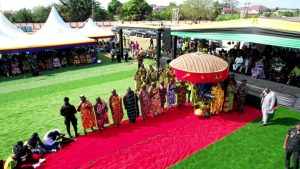
Otumfuo made the call at the Faculty of Applied Arts and Technology (FAAT) Week celebration at Takoradi Technical University (TTU), where he challenged the institution to develop the technical and creative skills needed to transform the country’s arts industry.

He expressed concern that despite the growing international recognition of Ghanaian designers and artists, locally manufactured fashion products remained underrepresented in both domestic and international markets.
“What you cannot find in the shops, though, are Made-in-Ghana labels and sadly, even on the domestic market, our shops are dominated by foreign products, save for the growing indigenous sector,” he observed.

The Asantehene said Ghana was yet to fully translate the international recognition of its creative talents into commercial opportunities for locally produced goods.
He urged artists, designers and students to improve the quality of their work, remain competitive internationally and preserve the country’s cultural identity through their creative expressions.

Otumfuo also identified the shortage of middle-level technical skills as a constraint on industrial development and the growth of the creative sector, despite progress in tertiary education.

“Your university stands at the critical point in the value chain where heritage and culture meet economic value,” he said.
He challenged TTU to bridge the skills gap by connecting indigenous knowledge with formal education, experienced artisans with young designers, and traditional craftsmanship with modern technology.

He further highlighted Ghana’s traditions in weaving, pottery, metalworking, woodcarving, architecture and visual communication as a strong foundation for developing a globally competitive creative industry.
The Asantehene commended the university for placing arts and cultural heritage at the centre of its academic activities and expressed confidence in its ability to nurture the next generation of artists and designers.
The Vice-Chancellor of TTU, Rev. Prof. John Frank Eshun, said the celebration was intended to recognise the importance of preserving Ghana’s cultural identity while embracing innovation and pursuing excellence.
He called for the creative arts to be recognised as an organised economic sector rather than being treated mainly as a cultural and recreational activity.
“The creative arts must move beyond being treated largely as a cultural and recreational sector, but as an organised economic development agenda,” he said.
“Ghana must move from celebrating its heritage to building an economy around it,” he added.
Rev. Prof. Eshun reaffirmed the university’s commitment to equipping students with the technical knowledge, creativity and entrepreneurial skills needed to turn cultural resources into wealth, employment and competitive products.
The Minister for Tourism, Arts and Culture, Abla Dzifa Gomashie, said the industry required diverse skills and adequate investment to unlock its economic potential.
She identified cultural festivals, historical sites, museums, tourism attractions and creative enterprises as areas offering opportunities for investment, innovation and job creation.
She said the government, through her ministry, had made investments in promoting the arts and encouraged students to develop their talents into products, services and businesses capable of competing in local and international markets.

The Minister for Lands and Natural Resources, Emmanuel Armah-Kofi Buah, linked the preservation of Ghana’s cultural heritage to the protection of its land and natural resources.

He described the country’s natural resources as an inheritance that must be protected for future generations, warning that environmental degradation threatened livelihoods as well as the cultural and tourism assets of communities.
“Heritage begins with the land. It holds our ancestors. It shapes our identity. And we hold it in trust for generations yet unborn,” he said.


Mr Buah cited pollution of the Pra, Ankobra and Tano rivers as a threat to communities and the country’s heritage, calling for collective action by government, traditional authorities, universities, industry and citizens to protect natural resources.
He also challenged FAAT students to use their creative talents to promote environmental protection and develop innovative products from locally available materials.

The President of the Western Regional House of Chiefs and Paramount Chief of the Essikado Traditional Area, Nana Kobina Nketsia V, who chaired the event, urged Ghanaians to preserve their cultural heritage amid modernisation.
He said developed societies had built on their cultural foundations to achieve progress and cautioned against abandoning Ghanaian traditions in the pursuit of modern development.

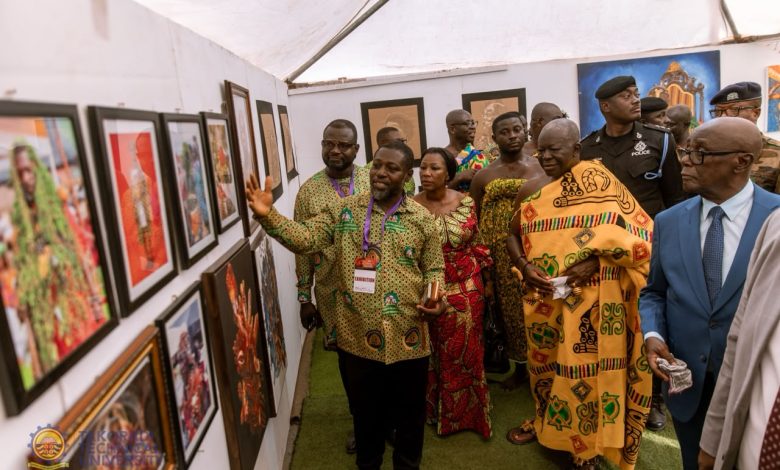
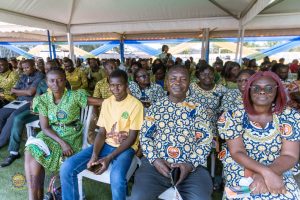
The celebration, held under the theme, “Celebrating Heritage, Innovation, and Excellence: A Tribute to Otumfuo Osei Tutu II’s Legacy,” featured cultural performances, an exhibition of artistic creations and a fashion show showcasing designs by FAAT students.
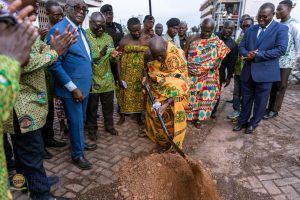
The event also saw Otumfuo cut the sod for the proposed Otumfuo Osei Tutu II Art Museum at Takoradi Technical University, an initiative expected to promote artistic expression, cultural preservation and the development of the creative arts.