2027 Budget: 10 key takeaways from Ato Forson’s economic blueprint
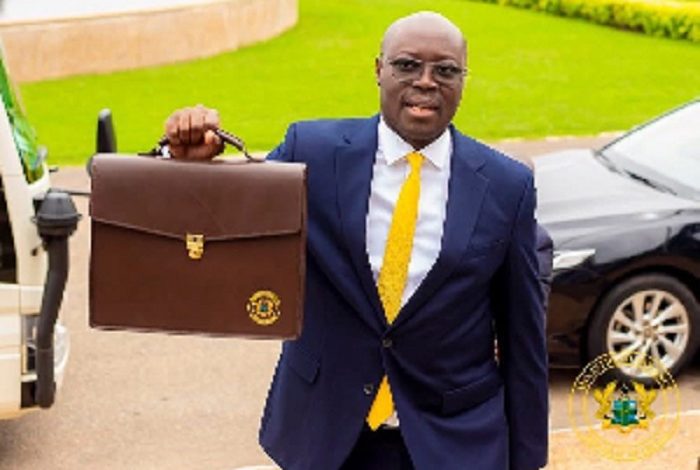
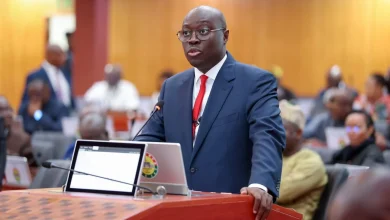
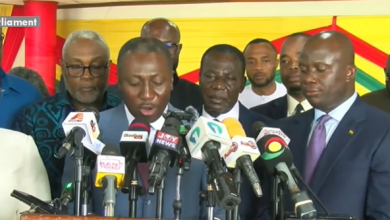
Finance Minister Dr Cassiel Ato Forson on Thursday, November 12, 2026, presented the 2027 Budget Statement and Economic Policy to Parliament, outlining the government’s economic priorities as Ghana prepares to mark its 70th anniversary of independence.
The budget signals a shift from economic recovery and stabilization towards structural transformation, with an emphasis on industrialization, local production, infrastructure development and job creation.
Here are 10 key takeaways from the 2027 Budget Statement:
1. A US$10 billion New Economy transformation programme
Government is launching a four-year US$10 billion programme, dubbed The New Economy: New Ghana, Jobs and Prosperity, to transform the economy between 2027 and 2030.
An initial GH¢30 billion, equivalent to 1.5% of GDP, has been allocated to the programme in 2027. It will be implemented through eight pillars: macroeconomic stability and affordable finance, commercial agriculture, energy infrastructure, critical minerals value addition, tourism and creative arts, textiles and garments, pharmaceuticals and biomanufacturing, and the technology economy.
2. No new taxes and exemptions for clean energy equipment
The 2027 Budget introduces no new taxes, with the government instead seeking to improve revenue mobilisation through stronger tax compliance, digital economy taxation and measures to close revenue leakages.
Revenue and grants are projected at GH¢323.4 billion for the year.
As part of efforts to accelerate the adoption of renewable energy and support the 24-Hour Economy, the government will also exempt solar panels and batteries from import duties and Value Added Tax (VAT).
The measures are intended to lower the cost of acquiring clean energy equipment and encourage greater investment in renewable energy.
3. Increased focus on capital expenditure
The government is projecting total cash expenditure of GH¢389.2 billion in 2027, with a significant allocation towards capital investment.
Direct capital expenditure is projected at GH¢100.4 billion, comprising GH¢88.4 billion in domestic financing and GH¢12 billion in external financing. The figure rises to GH¢120.5 billion when capital transfers to other government units are included.
The broader capital investment allocation is expected to exceed projected interest payments of GH¢61 billion by approximately 98% and the GH¢92.6 billion earmarked for public sector wages and salaries by about 30%.
The emphasis reflects the government’s intention to channel more resources into infrastructure and productive investments to support long-term economic growth.
4. Early redemption of more than GH¢36 billion in debt
The government has announced plans to retire significant portions of its debt ahead of their scheduled maturity dates as part of efforts to strengthen public debt management and restore investor confidence.
Dr Forson announced the immediate early redemption of GH¢29 billion in Domestic Debt Exchange Programme (DDEP) bonds due in February 2027.
Government also intends to settle a US$590 million Eurobond obligation due in January 2027 by December 31, 2026.
Together, the two payments are expected to result in the early retirement of more than GH¢36 billion in debt, reducing near-term repayment obligations and helping to limit future debt pressures.
5. Restrictions on raw exports and staple food imports
The government plans to introduce restrictions on selected imports and raw commodity exports as part of its drive to promote local production, processing and value addition.
Commercial rice imports are expected to be prohibited by 2030, while the government is targeting 100% local processing of cocoa by the same year.
The broader objective is to retain more value within the Ghanaian economy by encouraging local industries to process raw materials before they are exported or consumed.
6. Buy Ghana: Public institutions to prioritise locally made products
The government intends to amend public procurement laws to give priority to locally manufactured goods in the use of public funds.
Under the proposed changes, public institutions will be required to source selected products, including rice and other staple foods for schools and hospitals, as well as uniforms and textiles for security agencies and other state institutions, from Ghanaian producers.
The policy will also extend to medicines, where locally manufactured alternatives are available and meet the required Food and Drugs Authority (FDA) standards.
The initiative is expected to create a reliable market for local manufacturers, stimulate domestic production, support businesses and generate employment.
7. Energy expansion and nuclear readiness
The government is committing US$2.2 billion to its energy infrastructure pillar, with the objective of reducing electricity generation costs from 16 US cents per kilowatt-hour to 8 US cents or less.
The programme includes the construction of a state-owned 1,450-megawatt thermal power plant and a 600-megawatt solar facility supported by 2,000 megawatt-hours of battery storage.
The government also plans to phase out emergency power plants by 2030 as part of efforts to reduce the cost of electricity generation and strengthen energy security.
8. Debt-free mega infrastructure projects through resource-backed financing
Government plans to use revenues from the country’s natural resources to finance major infrastructure projects without relying on additional borrowing.
Dr Forson said the government had accumulated US$3 billion at the Bank of Ghana from oil revenues and mineral royalties to fully finance the Accra–Kumasi Expressway.
The financing arrangement, according to the announcement, is expected to generate savings of more than US$1 billion against initial project estimates, allowing the government to also finance the Accra Orbital Expressway.
The same financing model is expected to be applied in 2027 and 2028 to construct the Western Corridor Railway Line, connecting Takoradi to Nyinahin.
The approach is intended to ensure that proceeds from Ghana’s natural resources are channelled into long-term infrastructure development while limiting the need for additional public borrowing.
9. Ghana Sovereign Wealth Fund and new fiscal laws
The government plans to establish a Ghana Sovereign Wealth Fund through the merger of the Minerals Income Investment Fund (MIIF) and the Ghana Infrastructure Investment Fund (GIIF).
The proposed fund is expected to serve as an equity investment partner for projects under the 24-Hour Economy initiative and support the financing of strategic national investments.
Government will also introduce a Natural Resource Revenue Management Act to strengthen the management and utilisation of proceeds from the country’s natural resources.
A new Loans Act is also planned to strengthen controls over public borrowing and promote fiscal discipline.
Additionally, the State Proceedings Act will be amended to prevent judgment creditors from garnishing the Consolidated Fund and Contingency Fund, protecting public funds from disruptions arising from such legal actions.
10. Uncapping statutory funds to support youth employment and poultry production
Government plans to amend the Earmarked Funds Capping and Realignment Act to uncap revenue from the Communications Service Tax and channel additional resources into youth development programmes.
The measure is expected to immediately release an additional GH¢1 billion to support youth employment, skills development and apprenticeship opportunities.
The government will also uncap levies allocated to the Ghana EXIM Bank, with at least 40% of the proceeds earmarked to support efforts to make Ghana self-sufficient in poultry and animal feed production.
The measures are intended to expand financing for youth-focused interventions while strengthening local poultry production and reducing the country’s dependence on imported poultry products.