Supreme Court dismisses challenge to OSP powers
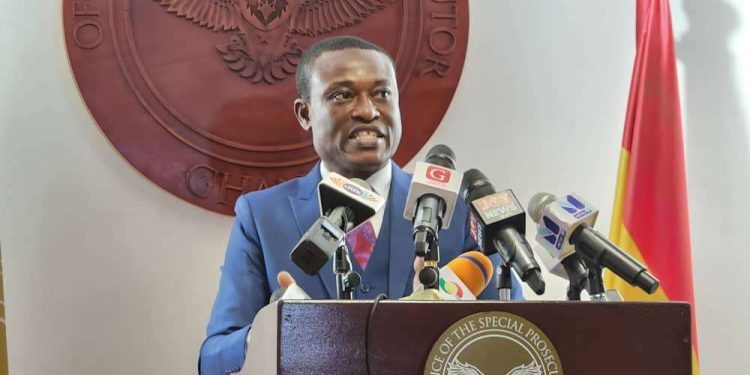
The Supreme Court has unanimously upheld the constitutionality of the Office of the Special Prosecutor (OSP) Act, 2017 (Act 959), but ruled that the Attorney-General retains the constitutional authority to discontinue prosecutions initiated by the OSP.
The decision settles a constitutional challenge brought by private legal practitioner Noah Adamtey, who questioned whether the prosecutorial powers granted to the OSP under Act 959 were consistent with Ghana’s 1992 Constitution.
Adamtey argued that Parliament exceeded its powers by establishing the OSP with independent prosecutorial authority. According to his suit, Article 88 of the Constitution vests prosecutorial powers solely in the Attorney-General, making it unconstitutional for Parliament to create another body with similar powers through ordinary legislation.
The Attorney-General supported the challenge, maintaining that although prosecutorial powers may be delegated, such delegation must remain under the Attorney-General’s supervision and cannot be permanently vested in an independent institution without a constitutional amendment.
During proceedings, the OSP sought to join the case as an interested party, but the Supreme Court rejected the application, holding that the constitutional questions could be determined between the plaintiff and the Attorney-General. However, several civil society organisations were allowed to participate in the proceedings due to their role in promoting anti-corruption reforms.
In its unanimous judgment delivered on Wednesday, July 29, the apex court upheld the constitutionality of the OSP Act, affirming the legal basis for the establishment and operation of the Office of the Special Prosecutor.
However, the court also ruled that the Attorney-General, by virtue of Article 88 of the Constitution, has the power to discontinue any prosecution undertaken by the OSP.