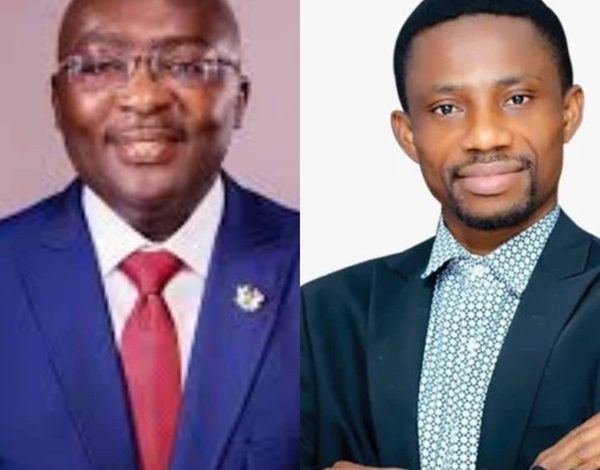
A Professor at the Department of History, Political Science and Public Administration at the Kwame Nkrumah University of Science and Technology (KNUST) Samuel Adu-Gyamfi, has raised fundamental questions about the consistency, electoral logic and campaign strategy of Dr. Mahamudu Bawumia, warning that unresolved contradictions could erode public confidence in his leadership credentials.

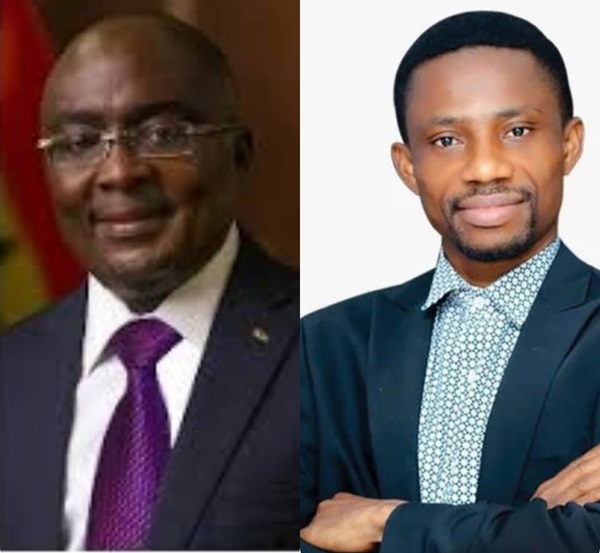
In a series of analytical articles written on Friday, January 16, 2026, the political examines what he describes as growing tensions between Dr. Bawumia’s past principles and his current political posture.
NPP presidential primaries set for 31 January 2026
The New Patriotic Party (NPP) has scheduled its presidential primaries for Saturday, January 31, 2026, as part of the process to select its flagbearer ahead of the 2028 general elections.
Five candidates are confirmed to be contesting the flagbearer race: former Vice-President Dr. Mahamudu Bawumia, Kennedy Ohene Agyapong, Dr. Bryan Acheampong, Dr. Yaw Osei Adutwum, and Kwabena Agyei Agyepong. The party has completed key preparatory steps including voter register validation nationwide and the official balloting that determined the order of names on the ballot.
In the lead-up to the primaries, aspirants have been actively campaigning on varied platforms. Dr. Bawumia has been assuring party delegates of unity and renewal, saying “This is a journey with all and for all; we will win together in January, by the grace of God,” in comments emphasising collective effort to rebuild the party.
Meanwhile, other candidates like Dr. Yaw Osei Adutwum have sought to broaden their appeal with issue-based campaigns, such as a focus on poverty alleviation.
Party stakeholders have also urged the NPP to consider holding a flagbearer debate ahead of the January polls to help delegates make more informed decisions.
Principles, Consistency and the Weight of Past Positions
But Prof. Adu-Gyamfi argued that democratic leadership is anchored on credibility accumulated over time, not momentary political convenience. He recalls that Dr. Bawumia, particularly between 2014 and 2016, built a reputation as a fierce critic of fiscal indiscipline, economic mismanagement and weak governance structures.
“These positions were not casual remarks; they were framed as moral and economic absolutes,” the professor noted, stressing that voters therefore expect clarity when such standards appear to shift.
“The real question is not whether circumstances have changed, because they always do,” he wrote. “The real question is whether Dr. Bawumia has offered a clear, intellectually honest framework explaining why the standards he once championed no longer apply.”
Without such an explanation, he warned, voters may interpret the shift as “principle substitution rather than principle evolution,” a perception that could weaken public trust.
Ethnic arithmetic and contradictory electoral logic
Turning to electoral strategy, Prof. Adu-Gyamfi revisits Dr. Bawumia’s earlier public assessment that Ghanaians might be reluctant to vote for another northern presidential candidate after former President John Mahama.
He described the statement, made during the 2023 presidential primaries and the 2024 general elections, as a serious claim about voter psychology rather than a passing comment.
“If Dr. Bawumia genuinely believed that voter appetite for another northern presidential candidate was limited, then his decision to contest again raises an unavoidable analytical puzzle,” he stated.
According to Prof. Adu-Gyamfi, political science teaches that contradictory electoral logic must be explained either by new data or by changing incentives. “If no new data has been presented, observers are entitled to question whether the motivation is strategic clarity or personal ambition,” he added.
Silence on the economy and campaign vulnerability
The professor also expressed concern about what he described as a conspicuous silence on economic stewardship in Dr. Bawumia’s current campaign messaging, despite the economy being his strongest intellectual and professional asset.
“For Dr. Bawumia, the economy, macro-stability and reform-driven governance were once the foundation of his political brand,” he wrote.
“In political communication theory, issue avoidance is often interpreted as issue vulnerability,” Prof. Adu-Gyamfi warned, questioning whether the economic record has become politically costly to defend or whether the campaign is deliberately retreating from its defining strength.
“A campaign that abandons its strongest intellectual asset without replacing it with a compelling alternative risks appearing defensive rather than visionary,” he cautioned.
Zongo, Northern and Muslim vote: promise versus performance
Prof. Adu-Gyamfi further interrogates claims that bloc support from Zongo communities, northern constituencies and Muslim voters would decisively reshape the electoral map in Dr. Bawumia’s favour.
He noted that the promise of overwhelming support from these constituencies played a key role in persuading sceptical delegates and voters during the 2023 electoral cycle. However, available results, he argued, suggest underperformance in several of the very areas expected to form Dr. Bawumia’s strongest base.
“This creates a serious credibility gap between mobilisation rhetoric and electoral delivery,” he observed, raising questions about whether assumptions on identity-based voting were flawed or whether campaign organisation failed to convert identity into turnout.
“In electoral politics, missed promises do not simply disappear. They are remembered,” he stressed.
A test of coherence, not an attack
In his concluding assessment, Prof. Adu-Gyamfi emphasised that his analysis should be seen not as a personal attack but as a test of coherence and strategic clarity.
“They ask whether principles align with present posture, whether past electoral logic aligns with current ambition, and whether promised voting coalitions align with measurable outcomes,” he wrote.
“In leadership selection, voters are not only choosing a candidate,” he concluded. “They are choosing a theory of victory—and any theory that cannot explain its own contradictions will struggle to inspire confidence.”
Read the full articles below
Article 1
Principles, Consistency, and the Burden of One’s Own Words
One of the most important currencies in democratic leadership is credibility over time. Political actors are not judged only by what they say today, but by whether their current positions are internally consistent with their previously declared principles.
Dr. Mahamudu Bawumia built a strong reputation as a principle-driven political actor, particularly between 2014 and 2016, when he positioned himself as a critic of fiscal indiscipline, economic mismanagement, and weak governance structures. Those positions were not casual remarks; they were framed as moral and economic absolutes.
The critical question now is not whether circumstances have changed. Circumstances always do. The real question is this:
Has Dr. Bawumia offered a clear, intellectually honest framework explaining why the standards he once championed no longer apply, or why he should now be judged by a different metric?
Without such an explanation, voters are left with the impression of principle substitution rather than principle evolution. In political theory, this is dangerous. Leaders who appear to move the goalposts retroactively weaken public trust, even when their intentions are sincere.
Key Analytical Question
• Are Dr. Bawumia’s current positions a continuation of his earlier principles under new constraints, or a strategic retreat from them?
Article 2
Ethnic Arithmetic, Electoral Logic, and the Question of Motivation
Electoral politics is not only about ideology; it is also about coalition mathematics. During the 2023 Presidential Primaries and 2024 General Elections, Dr. Bawumia publicly raised a question that has now returned with force:
Would Ghanaians vote for another Northerner after John Mahama?
This statement was not made in abstraction. It was presented as a realistic assessment of voter psychology and electoral fatigue. That is precisely why it now deserves scrutiny.
If Dr. Bawumia genuinely believed that voter appetite for another northern presidential candidate was limited, then his decision to contest again raises an unavoidable analytical puzzle:
What has changed in the electorate since that assessment was made?
• Has voter sentiment shifted measurably?
• Has ethnic voting behaviour changed structurally?
• Or has the earlier statement been abandoned without explanation?
Political science teaches us that contradictory electoral logic signals either new data or new incentives. If no new data has been presented, observers are entitled to question whether the motivation for re-contesting is strategic clarity or personal ambition.
Critical Question
• Is Dr. Bawumia now rejecting his own earlier electoral analysis, and if so, on what empirical basis?
Article 3
The Silence on the Economy and the Problem of Campaign Narrative
Every successful presidential campaign is anchored on a central governing narrative. For Dr. Bawumia, that narrative has historically been the economy, macro-stability, and reform-driven governance.
However, a notable feature of his current posture is the relative silence on economic stewardship, despite the economy being his strongest intellectual and professional advantage.
This silence is not neutral. In political communication theory, issue avoidance is often interpreted as issue vulnerability.
If the economy is no longer being foregrounded, voters are left asking:
• Is the economic record too politically costly to defend?
• Is there uncertainty about ownership of outcomes?
• Or is the campaign deliberately shifting away from what once defined it?
A campaign that abandons its strongest intellectual asset without replacing it with a compelling alternative risks appearing defensive rather than visionary.
Key Question
• If the economy was the foundation of Dr. Bawumia’s credibility, why is it no longer the centrepiece of his message?
Article 4
The Zongo, Northern, and Muslim Vote: Promise Versus Performance
One of the most powerful mobilising narratives in the 2023 elections was the promise of bloc support from Zongo communities, northern constituencies, and Muslim voters, particularly as a counterweight to perceived weaknesses in parts of the South.
That promise was not symbolic. It was instrumental in persuading sceptical delegates and voters that the electoral map could be decisively altered.
The empirical outcome, however, tells a different story.
Available results indicate that Dr. Bawumia underperformed in several of the very constituencies that were expected to form his strongest base, in some cases performing worse than previous candidates.
This creates a serious credibility gap between mobilisation rhetoric and electoral delivery.
Critical Questions
• What explains the failure of the promised voting bloc to materialise?
• Were the assumptions about identity-based voting flawed?
• Or was the organisational machinery insufficient to convert identity into turnout?
In electoral politics, missed promises do not simply disappear. They are remembered as benchmarks against which future claims are judged.
Concluding Strategic Framing for Team Ken
Taken together, these questions are not attacks. They are tests of coherence.
They ask whether Dr. Bawumia’s:
• principles align with his present posture,
• past electoral logic aligns with current ambition,
• economic brand aligns with campaign silence, and
• promised voting coalitions align with measurable outcomes.
In leadership selection, voters are not only choosing a candidate. They are choosing a theory of victory.
Any theory that cannot explain its own contradictions will struggle to inspire confidence.
Source: Ghana/otecmfghana.com/Samuel Kwaw