A UK political party, Reform UK, has sparked controversy after proposing to deny visas to citizens of countries demanding compensation from Britain over its role in the transatlantic slave trade.
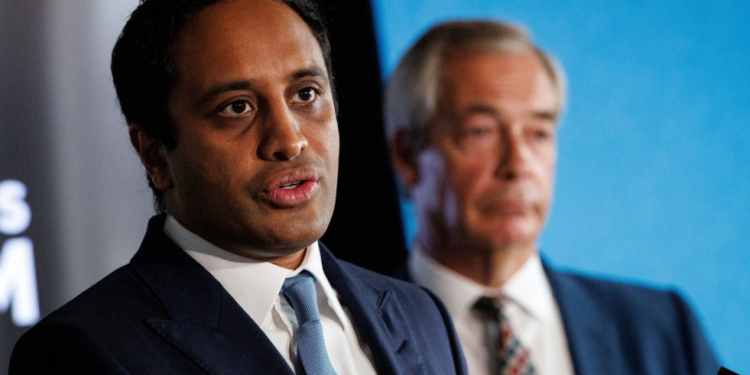
The party’s home affairs spokesperson, Zia Yusuf, described calls for reparations as “insulting,” arguing that Britain should not be held financially accountable for historical injustices.
According to him, the UK has issued about 3.8 million visas over the past two decades to individuals from countries now seeking reparations.
The remarks come amid growing global calls for justice over the transatlantic slave trade, during which more than 15 million Africans were forcibly transported across the Atlantic by European powers, including Britain. Historians have linked wealth generated from slavery to the industrial growth of Western nations.
The issue gained renewed attention recently after the United Nations adopted a resolution describing the slave trade as the “gravest crime against humanity” and calling for reparations as a step toward addressing historical injustices. The resolution was backed by the African Union and the Caribbean Community (CARICOM).
The proposal was championed by President John Dramani Mahama, who urged global action, stating that history demands accountability for the millions who suffered under slavery.
However, the UK and several European Union countries abstained from the vote, while the United States opposed it. The resolution is not legally binding.
Yusuf, according to the Telegraph, defended his party’s stance by arguing that Britain played a leading role in abolishing slavery and should not be penalised further. He insisted the UK would not allow what he described as attempts to use history to extract financial compensation.
Reform UK has also previously indicated it would consider scrapping foreign aid to countries pushing for reparations.
The debate over reparations has intensified in recent years, with some estimates suggesting Britain could face trillions of dollars in liability. A 2023 report led by former International Court of Justice judge Patrick Robinson estimated that the UK alone could owe up to $24 trillion in reparations across affected countries.
Meanwhile, the CARICOM Reparations Commission has clarified that its objective is not to destabilise the British economy but to pursue constructive dialogue and develop mutually beneficial approaches to restorative justice between former colonial powers and affected nations.
The issue remains highly sensitive, particularly in countries like Ghana, where the legacy of the slave trade continues to shape calls for historical accountability and economic redress.