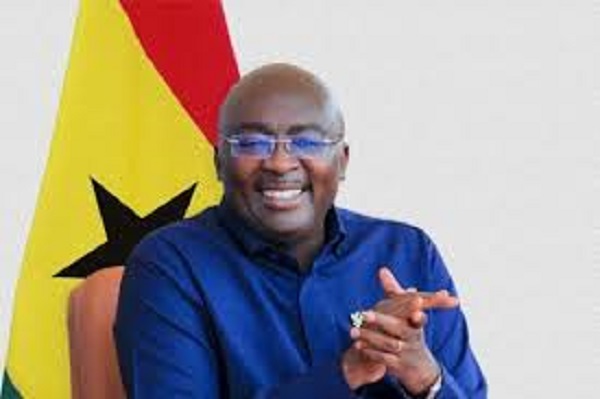
Former Vice-President and 2028 New Patriotic Party (NPP) presidential flagbearer, Dr Mahamudu Bawumia, has appealed to President John Dramani Mahama not to assent to the recently passed Public Tribunals Bill, 2026, urging him instead to suspend the process and allow for broad stakeholder consultations before any final decision is taken.
In a statement issued on Sunday, July 19, Dr Bawumia described the legislation as one with far-reaching implications for Ghana’s justice delivery system, judicial independence and democratic governance, insisting that such a fundamental reform should be built on national consensus rather than a parliamentary majority.
“I have one respectful request of President Mahama. Mr President – Do not sign this Bill. Pause, and let the nation talk,” he stated.
According to him, the Bill, which Parliament passed last week after waiving the mandatory one-day interval between the consideration stage and third reading, was rushed through despite objections from the Minority and organised labour.
He argued that the process had failed to accommodate concerns raised by key stakeholders adequately.
“This is not a partisan request. The Trades Union Congress, the voice of millions of Ghanaian workers, has called for the Bill to be withdrawn altogether, warning that in its current form it could become a potent tool for weaponising justice delivery. Those are the words of Ghanaian workers, not of any political party,” Dr Bawumia said.
The former Vice-President also questioned why Parliament proceeded with the legislation before publishing the report of the Constitution Review Committee, which President Mahama had established.
According to him, the committee recommended the removal of Regional Tribunals from the Constitution because the High Court had long assumed their workload.
“The President established the Constitution Review Committee, and it reported last December. This Committee recommended removing Regional Tribunals from the Constitution because the High Court has long carried their caseload. Yet the report has not been published. Before the nation has even read it, Parliament has rushed through and legislated in the opposite direction. Mr President, publish the report first.”
Concerns over tribunals
Dr Bawumia also raised concerns about the composition of the proposed tribunals, arguing that allowing panels that include non-lawyers to adjudicate criminal matters could revive painful memories of past tribunal systems.
“Ghanaians remember tribunals, and we remember what was done in their name. Our courts are congested, yes. But the answer to congested courts is to strengthen the courts: more judges, more courtrooms and digitised processes. It is not to build a second system of justice beside the one the Constitution already gives us.”
He further cautioned that although the government enjoys one of the largest parliamentary majorities in the Fourth Republic, legislative power should be exercised with restraint.
“Not everything that can be passed should be passed. The larger the majority, the greater the duty of restraint. History will not ask how many votes a law received. It will ask whether the law reflected the best desires of a broad section of the Ghanaian society.”
Call for national dialogue.
Dr Bawumia proposed that President Mahama withhold assent to the Bill and instead initiate a comprehensive national consultation involving the Ghana Bar Association, organised labour, civil society organisations, political parties and the Judiciary.
“Justice belongs to no government and no party. It belongs to the Ghanaian people, and a law that reshapes the architecture of justice should rest on national consensus, not on a headcount.”
He concluded by urging the President to invoke the constitutional consultative process through the Council of State.
“Mr President, the pen is in your hand. Use it, not to sign this Bill, but to write an invitation to the nation through the Council of State in accordance with Articles 90 and 106 of the 1992 Constitution.”
Background
Parliament passed the Public Tribunals Bill, 2026, in the early hours of Friday after approving a motion to waive the mandatory one-day interval between the consideration stage and the third reading, allowing the Bill to be passed on the same day. The legislation seeks to establish a new legal framework for the operation of tribunals, with the government arguing that it will improve access to justice, reduce court backlogs and strengthen the administration of justice. It will take effect only after receiving presidential assent.
The Bill, however, generated significant controversy during its passage. The Minority in Parliament staged a walkout, arguing that it creates a parallel adjudicatory system not contemplated by the Constitution and expressing concern over provisions allowing non-lawyers to serve on tribunal panels hearing criminal matters. Organised labour, including the Trades Union Congress, also publicly opposed the legislation, warning that it could be abused and calling for its withdrawal.
Government has rejected those concerns, maintaining that the tribunals are firmly grounded in the 1992 Constitution and will operate with appropriate constitutional safeguards. Attorney-General and Minister for Justice Dr Dominic Ayine has insisted that the new tribunal system is intended to complement the existing courts, expedite justice delivery and will not resurrect the abuses associated with tribunals of the past.