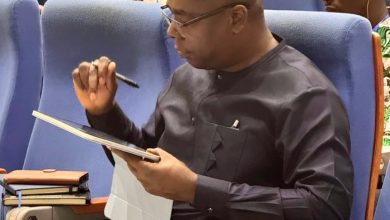
A Senior Lecturer at the Kumasi Technical University (KsTU), Prof. Solomon Forkuo Kwarteng, has urged the President John Mahama government to consider investing funds allocated to the No Fees Stress Policy in the construction of affordable hostel facilities for tertiary students across the country.
He said the construction of government-owned hostels would provide students with affordable accommodation while generating revenue for the state through the payment of modest fees.
According to him, the initiative could offer a sustainable solution to the accommodation challenges confronting students in tertiary institutions.
The No Fees Stress Policy was introduced by President John Dramani Mahama as part of his Resetting Ghana Agenda to reduce the financial burden on students pursuing tertiary education.
The Minister of Education, Haruna Iddrisu, has disclosed that the government has spent GH¢917 million under the policy, benefiting 321,807 students so far.
Prof. Forkuo Kwarteng, however, believes that investing part of such public funds in accommodation infrastructure would provide additional relief to students and their parents.
He noted that students are paying between GH¢5,000 and GH¢10,000 for hostel accommodation, putting further pressure on families already struggling to finance their children’s education.
“The government should consider building affordable hostels for tertiary students across the country to ease the accommodation burden and make university education more manageable,” he said.
Speaking on Otec FM’s morning show, Nyansapo, hosted by Kwaku Owusu Boateng on Thursday, October 15, 2026, the lecturer said the No Fees Stress Policy had not adequately addressed students’ difficulties in accessing affordable accommodation.
He also expressed concern about the poor conditions in some private hostels, where inadequate ventilation, overcrowding and poor facilities could expose students to sickness and other health problems.
Prof. Forkuo Kwarteng urged the government to adopt a broader approach to supporting tertiary students by addressing both academic costs and accommodation needs.
“Students need a comfortable and healthy environment to study effectively. Providing affordable accommodation will give them peace of mind and help improve their learning and academic performance,” he said.
Source: Ghana/otecfm Ghana.com/Francis Appiah