The Minority in Parliament has accused businessman Ibrahim Mahama of exerting growing influence over Ghana’s mineral sector, warning of what it describes as an emerging pattern of “state capture” under the administration of John Dramani Mahama.
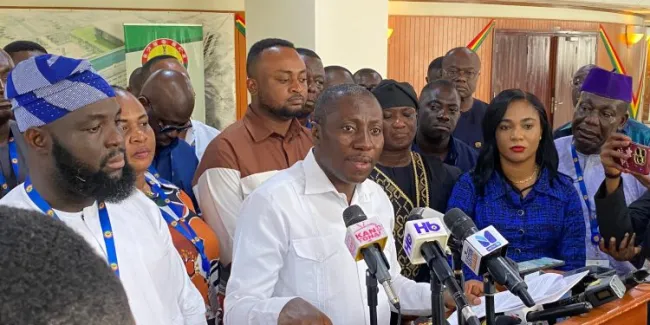
In a strongly worded statement issued on 18 March, the caucus claimed that key decisions, transactions, and institutional appointments within the sector point to a concentration of power around the President’s brother and his company, Engineers & Planners.
Concerns over Damang Mine transition
The Minority raised alarm over the imminent transition of the Damang Gold Mine from Gold Fields Ghana to state control, noting that critical details about the future operator remain undisclosed.
According to the statement, Parliament and the public have not been informed about the selection process, financing arrangements, or operational framework for the mine, creating uncertainty for workers, investors, and the broader economy.
Black Volta and Sankofa projects under scrutiny
The caucus also cited the acquisition of the Black Volta and Sankofa Gold Projects by Engineers & Planners as a key example of what it termed “state-linked influence.”
It alleged that the takeover was facilitated by access to significant financing, reportedly amounting to $100 million, secured shortly after the current administration assumed office.
The Minority further claimed that the transaction may have involved undue pressure on the previous asset holders, raising concerns about fairness and transparency in the sector.
Nyinahin Bauxite deposits and institutional questions
Similar concerns were raised about developments at Nyinahin, home to major bauxite deposits managed under the Ghana Integrated Aluminium Development Corporation (GIADEC).
The statement pointed to what it described as opaque lease arrangements and unclear allocation processes, warning that institutional silence on such matters undermines public confidence.
Allegations of institutional capture
Beyond specific projects, the Minority alleged a broader pattern of influence across key institutions in the mineral governance architecture, including GIADEC, the Minerals Commission, and the Minerals Income Investment Fund (MIIF).
It claimed that several individuals in leadership positions within these bodies have past or present ties to Ibrahim Mahama’s business interests, creating potential conflicts of interest.
The caucus argued that this convergence suggests a shift in accountability away from established state structures toward private influence.
While affirming support for local participation in the mining sector, the Minority stressed that such efforts must be transparent, competitive, and broadly inclusive.
It warned against what it described as the concentration of opportunities around a single individual, cautioning that this could undermine Ghana’s credibility as a stable investment destination.
The caucus has called for the immediate disclosure of details surrounding the Damang transition, full transparency in all mineral sector transactions, and the implementation of strict conflict-of-interest safeguards.
The statement concluded that Ghana risks damaging its international reputation if concerns about governance and transparency are not addressed.
It urged the government to ensure that the country’s mineral wealth is managed in the interest of all citizens, warning that failure to act could have long-term economic and institutional consequences.