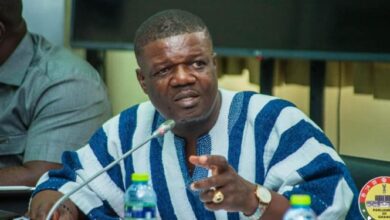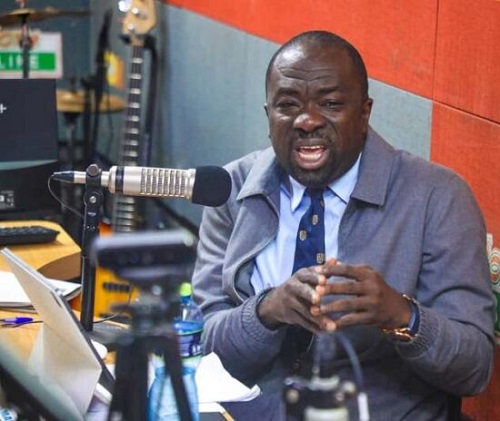
The Member of Parliament for Manhyia South, Lawyer Nana Agyei Baffour Awuah, has raised concerns over the proposed Tribunals Bill, 2026, arguing that it could undermine the constitutional powers of the Chief Justice in supervising and administering Ghana’s judiciary.
Speaking in an interview on Adom FM’s Dwaso Nsem morning show, the lawyer said the Constitution already clearly defines Ghana’s court structure, and warned that creating a separate tribunal system could alter the existing judicial arrangement.
He explained that Ghana’s judicial system consists of superior courts and lower courts, with the superior courts including the Supreme Court, Court of Appeal, High Court and Regional Tribunals.
“Under the Constitution, we already have superior courts and lower courts. Nobody can add or subtract anything from what the Constitution has already provided,” he said.
Mr Awuah argued that the proposed legislation seeks to remove Regional Tribunals from the existing superior court structure and introduce a new arrangement where Regional Tribunals would operate alongside District Tribunals.
“When you look at the tribunal system the NDC government wants to create, they want to take the Regional Tribunal from the superior courts and add District Tribunals to form a new tribunal system,” he stated.
According to him, the current judicial hierarchy places the Supreme Court at the top, followed by the Court of Appeal, High Court and Regional Tribunals, but the proposed bill would create a different structure.
“Today, our judicial system is the Supreme Court as the highest court, followed by the Court of Appeal, High Court and Regional Tribunals. But what they want to create is a system where the Regional Tribunal will come first, followed by District Tribunals,” he said.
The Manhyia South MP further argued that the bill could affect the constitutional role of the Chief Justice, who is responsible for the administration and supervision of the judiciary.
He cited provisions in the bill that empower the Judicial Council, together with a Tribunal Oversight Committee, to issue guidelines for the administration of the tribunal system.
“The Constitution says the person responsible for the administration and supervision of the judiciary is the Chief Justice. But when you look at the Tribunal Bill, it says the Judicial Council, together with the Tribunal Oversight Committee, will issue guidelines for the administration of the tribunal system,” he explained.
Mr Awuah said this effectively transfers some responsibilities of the Chief Justice to another body.
“So if they tell you this is not a parallel system, they are not being truthful. It is indeed a parallel system they have created,” he added.
The proposed Tribunals Bill, 2026, is currently before Parliament and seeks to reintroduce public tribunals as part of efforts to improve access to justice and strengthen the country’s justice delivery system.
If passed, the bill will establish a reformed tribunal system operating alongside the traditional courts, with constitutional backing, oversight mechanisms and safeguards for due process and human rights.
The legislation is also intended to operationalise Article 126 of the 1992 Constitution, which provides for tribunals within Ghana’s judicial system but has largely remained inactive over the years.