Full details of how former MASLOC CEO Sedina Tamakloe was arrested in US
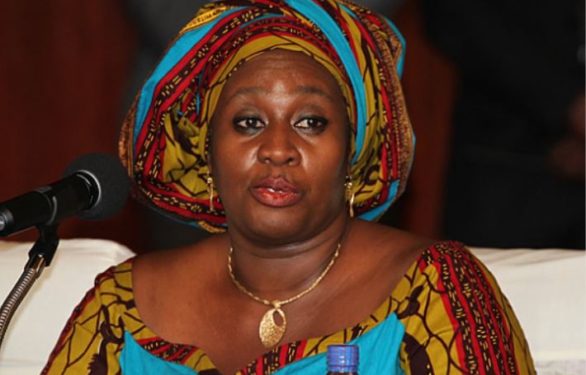
The United States Marshals Service has released detailed information on the arrest and detention of Sedina Tamakloe-Attionu, former Chief Executive Officer of the Microfinance and Small Loans Centre (MASLOC), following a request made under the U.S. Freedom of Information Act (FOIA).
News of the arrest of the former MASLOC CEO broke on January 16, 2026. It was reported that she was being detained at the Nevada Southern Detention Centre in the United States.
Sedina Tamakloe-Attionu was in April 2024, sentenced to 10 years’ imprisonment with hard labour after being found guilty on 78 counts, including causing financial loss to the state, stealing, conspiracy to steal, money laundering, and breaches of the Public Procurement Act.
Ms Tamakloe-Attionu fled to the United States ahead of the conclusion of her criminal trial in Ghana.
Documents released by the U.S. Marshals Service provide a step-by-step account of the arrest.
According to the unclassified law-enforcement sensitive information, a warrant for Ms Tamakloe-Attionu’s arrest was issued on December 12, 2025, by the U.S. District Court for the District of Nevada, citing her status as a fugitive from the Republic of Ghana following her conviction on embezzlement-related charges and Ghana’s request for extradition.
The documents indicate that on the same day, a Deputy United States Marshal was assigned to the case.
On January 6, 2026, members of the Nevada Violent Offenders Task Force located the former MASLOC CEO at her residence.
At about 2:30 p.m., officers positively identified her after she briefly opened and closed her front door.
At approximately 3:05 p.m., task force officers approached the residence to execute the arrest warrant.
Following a knock-and-announce procedure, Ms Tamakloe-Attionu opened the door and was taken into custody without incident.
She was placed in restraints, searched at the scene, and transported in a task force vehicle to the Federal Courthouse in Las Vegas.
She was subsequently conveyed by U.S. Marshals to the Henderson Detention Centre, a facility contracted by the U.S. Marshals Service, where she was held overnight.
On January 7, 2026, officers of the Henderson Police Department transported her back to the Federal Courthouse at about 8:30 a.m., where she was formally booked into U.S. Marshals Service custody.
Some names and operational details in the released documents were redacted in line with FOIA provisions.
The U.S. Marshals Service stated that the information was approved for public release after a determination that the redacted sections required protection.
Background
Sedina Tamakloe-Attionu was in April 2024, sentenced to 10 years’ imprisonment with hard labour after being found guilty on 78 counts, including causing financial loss to the state, stealing, conspiracy to steal, money laundering, and breaches of the Public Procurement Act.
Her co-accused, former MASLOC Chief Operating Officer Daniel Axim, was also sentenced to five years’ imprisonment with hard labour.
The two were prosecuted for offences committed between 2013 and 2016, involving the misappropriation of funds meant for MASLOC activities. The trial, which began in 2019, saw the state call six witnesses.
Sedina Tamakloe-Attionu was tried in absentia after she absconded while on permission from the court to seek medical treatment abroad. Daniel Axim, however, testified in person but did not call any witnesses.
Among the offences established by the court was the withdrawal of GH¢500,000 as a loan to Obaatampa Savings and Loans Company, which the convicts later demanded to be refunded after the institution declined to agree to a 24 percent interest rate. Although evidence showed the amount was refunded, it was not reflected in the accounts of MASLOC.
The court also found that over GH¢1.7 million allocated for a sensitisation exercise was misappropriated. MASLOC was expected to pay GH¢20 each to 85,300 beneficiaries, but only GH¢1,300 was used for the intended purpose.
Additionally, only GH¢579,800 out of GH¢1.4 million meant for victims of the Kantamanso inferno was disbursed, with the remainder unlawfully appropriated.
The case further involved inflated procurement costs for vehicles and Samsung mobile phones, with evidence indicating that the amounts paid exceeded prevailing market prices, despite the items being purchased in bulk.