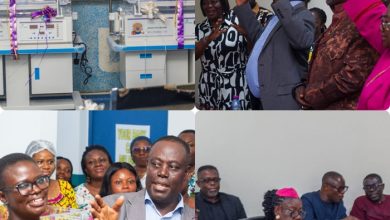
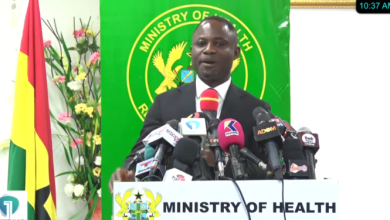
A Critique of Ignorance: Addressing Misconceptions Regarding the Heal Komfo Anokye Project (HeKAP)
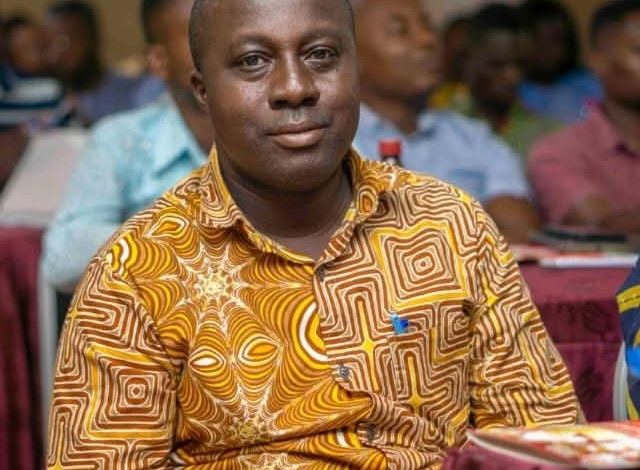
Michael Ofosu-Afriyie, Author and Deputy Manager, The Daily Banner Newspaper
Jerry James Sukah, the current Oforikrom NDC Communications Officer and aide to the CEO of Komfo Anokye Teaching Hospital (KATH), has recently ventured into complex administrative matters that appear to exceed his professional grasp.
Despite rumors of his impending appointment as Public Relations Manager, a role for which he lacks the requisite academic and technical credentials, Mr. Sukah has chosen to publicly challenge the integrity of the Heal Komfo Anokye Project (HeKAP).
In a weekend press release, Mr. Sukah questioned the management of HeKAP, an initiative launched by the Asantehene and executed by a three-member committee under a Board of Trustees.
His expressions of “disappointment” and naive allegations of financial unaccountability betray a profound misunderstanding of the project’s structure.
The Facts of the Matter
As a journalist who has monitored this project since its inception, I find it necessary to provide the public and those misled by Mr. Sukah’s rhetoric with the following facts:
Legal Framework:
HeKAP is a private fundraising vehicle registered with the Registrar General’s Department as the Heal Komfo Anokye Project Foundation (registered March 25, 2024).
Organizational Model:
The Foundation operates as a Company Limited by Guarantee (LBG), the standard legal model for non-governmental and charitable organizations.
Governance:
Under the patronage of the Asantehene, the Foundation was registered with two Directors: Samuel Adu-Boakye and Kojo Darko-Asante.
Accountability:
Although a private entity, the King mandated the Foundation to submit to periodic audits by the reputable firm Asamoah Bonsu and Co.
Transparency and Background:
Following the assumption of office by the current management under Dr. Paa Kwesi Baidoo, the HeKAP Committee, chaired by veteran media personality Samuel Adu-Boakye, proactively moved to brief the Asantehene on expenditures.
Nana Asamoah Bonsu’s audit findings have been submitted directly to the Manhyia Palace—the rightful owner of the project.
Furthermore, the Committee has maintained a high standard of public transparency.
Since the project’s launch, lists of donors ranging from individuals to WhatsApp groups have been regularly published in the Daily Graphic and on the official KATH website.
Word of Caution:
The new management of KATH would be well-advised to engage directly with the Manhyia Palace for any clarifications regarding HeKAP, rather than allowing political operatives to meddle in the King’s initiatives.
At a time when staff morale at KATH is reportedly waning due to internal systemic challenges, the CEO and his team should focus their intellect on resolving “in-house” administrative issues.
It is counterproductive to be distracted by the uninformed commentary of a political communicator like Mr. Sukah.
Crucial Distinction:
Komfo Anokye Teaching Hospital is merely the beneficiary of HeKAP; it is neither the sponsor nor the implementing agency.
Advice to Leadership:
I urge the CEO, Dr. Paa Kwesi Baidoo, to exercise sobriety and institutional caution.
Allowing a partisan communicator whose experience is largely confined to community radio and market information centers to influence the narrative of a hospital as prestigious as KATH is a strategic error.
The current Board, led by Oheneba Boachie Adjei (Hiahene), is already privy to the project’s details and has previously sought formal accounts.
There is no mystery here, only a lack of due diligence by those seeking to stir controversy.
Professionalism Over Partisanship:
It appears there is a subtext to these attacks which is a plot to replace the current Public Relations Manager with a political surrogate.
However, Public Relations is a sophisticated managerial function requiring a broad-minded professional and communications expert.
It is not a role for a novice or a political “errand boy.”
For the sake of KATH’s reputation, excellence must take precedence over political patronage.
By Michael Ofosu-Afriyie, Kumasi