Ghana on Friday, May 15, exited its US$3 billion loan-supported programme with the International Monetary Fund (IMF), going through three-years of austerity to restore macroeconomic stability, but “the grass is still not green” for the country.
The Fund says the country has now created a space for growth, with many investors expressing request to engage with Ghanaian authorities on opportunities in the world’s second largest cocoa producing economy.
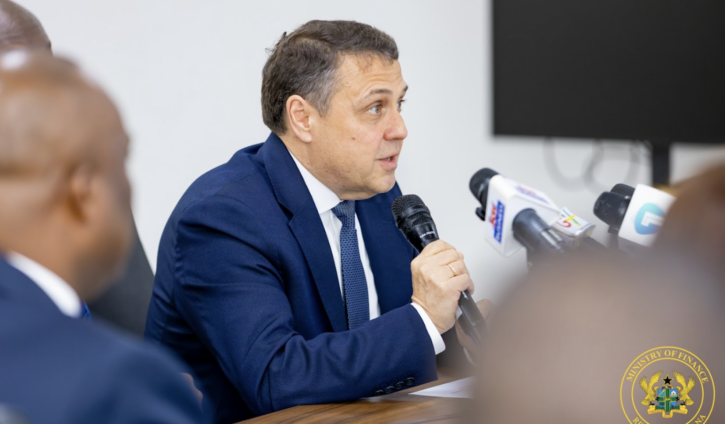
“We do see a lot of interest in exposure to Ghana and that the IMF has been bombarded by requests from the investors to meet and talk about Ghana going forward,” said Ruben Atoyan, the IMF’s Mission Chief for Ghana, cautioning unresolved risks could derail the gains.
At top of the risks were state-owned enterprises (SOEs) and quasi-fiscal activities outside the central government and commodity price volatility, noting its centrality to the new three-year non-financial Policy Coordination Instrument (PCI) agreement with the IMF.
Mr Atoyan, also a Division Chief for the IMF’s Africa Department, cited those risks during a joint press conference in Accra, between the Ministry of Finance and the IMF Staff Mission team.
It was after the IMF Staff Completed the 2026 Article IV Consultation and reaching Staff-Level Agreement with Ghana on the sixth review under the Extended Credit Facility (ECF) arrangement and on a 36-month PCI request.
Mr Atoyan noted that contingent liabilities from SOEs had historically been the predominant factor driving Ghana’s debt trajectory, indicating that the materialisation of fiscal risks outside of the central government would generate big shocks going forward.
He also cited commodity price volatility, particularly for gold, as a major concern, cautioning uncertain geopolitical environment as a risk to the commodity that anchored Ghana’s recent turnaround.
He said tackling those risks would be central to the technical assistance framework replacing the ECF and focused on strengthening fiscal institutions to ensure that SOEs did not generate fresh drains on public resources when shocks hit.
The IMF Division chief recommended to the Government to ensure that future policy choices protected resilience while supporting development with the goal of insulating the economy from future shocks “if and when they materialise.”
He urged using the current high terms-of-trade to build fiscal and reserve buffers from the gold windfall and controlling spending on SOEs outside central government, expressing the Fund’s readiness to support the country.
“The focus there is not only adjustment, but also on strengthening domestic institutions… to ensure that no contingent liabilities are created outside of the central government,” Mr Atoyan said.
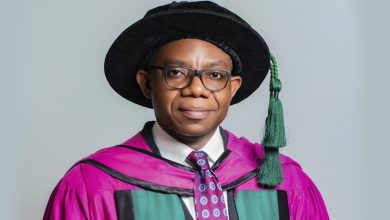
Dr Cassiel Ato Baah Forson, the Minister of Finance noted that with stabilisation achieved, the focus was now shifting to growth and jobs, announcing a new flagship programme “the new economy” to target growth sectors and employment creation.
“Be assured that from stability, we’ll build resilience, and from resilience, we’ll build an economy that will benefit the masses, and that is exactly where we are going,” the minister said.