New Patriotic Party (NPP) lawmaker Kojo Oppong Nkrumah has questioned the implementation of the government’s flagship 24-Hour Economy programme, arguing that nearly two years after the National Democratic Congress (NDC) took office and Parliament approved about GHC650 billion in public spending, there is little evidence the policy has been put into operation.
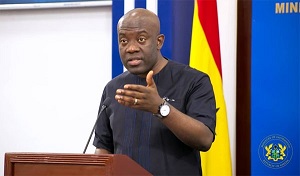
Speaking in Parliament on Wednesday while seconding a motion for the adoption of the Economy and Development Committee’s report, the Ranking Member on the committee said the government had failed to demonstrate that the programme was delivering on promises made during the 2024 election campaign.
Oppong Nkrumah said the 24-Hour Economy was presented as an industrialisation and job creation strategy based on a “one job, three people, three shifts” model designed to expand production and employment across the public and private sectors.
“Almost two years after assuming office, there is not one government agency implementing the one-three-three model,” he told Parliament.
The former Information Minister said Parliament had appropriated close to GH¢650 billion to fund government programmes over the period, yet the administration had not identified a single institution operating under the flagship model.
He argued that discussions during committee deliberations suggested the government was now focusing on constructing 24-hour markets and developing incentive packages for private businesses rather than implementing the original framework.
Oppong Nkrumah questioned whether building new markets alone would generate continuous commercial activity, noting that many existing markets across the country operate only on designated market days despite having adequate infrastructure.
He also criticised the government for acknowledging that fiscal and regulatory incentives intended to encourage private companies to adopt round-the-clock operations were still being developed.
According to him, the delay had undermined investor confidence because businesses require clear incentives before committing to additional production shifts and expanding their workforce.
The Ofoase-Ayirebi MP further argued that the 24-Hour Economy had effectively replaced the previous government’s One District, One Factory (1D1F) initiative, which he said had already produced measurable results.
Citing the National Development Planning Commission’s 2024 Annual Progress Report, published in June 2025, he said at least 150 1D1F projects were operational by the end of 2024.
He urged the government to revive and strengthen the industrialisation programme rather than replace it with what he described as a policy whose key implementation measures were still being developed.
Oppong Nkrumah also warned that delays in implementing an effective industrial policy would worsen youth unemployment, citing Ghana Statistical Service figures which he said put youth unemployment at about 32.4%.
He called on the government to accelerate industrialisation, restore investor confidence and adopt practical measures to create jobs, saying economic transformation must be measured by increased production and sustainable employment rather than policy announcements alone.