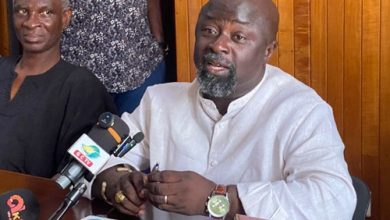
Prosecutorial power lies solely with my office; OSP Act unconstitutional – AG

The Office of the Attorney General has mounted a strong constitutional challenge against the legal framework underpinning the Office of the Special Prosecutor (OSP), arguing that Parliament overstepped its authority in granting the anti-corruption body independent prosecutorial powers.
In an affidavit filed at the Supreme Court on April 8, 2026, in the case of Adamtey v. Attorney General, the state’s legal team contends that the establishment of the OSP in its current form violates the 1992 Constitution.
At the centre of the argument is Article 88, which vests all prosecutorial authority of the Republic solely in the Attorney General. According to the filing, while the Constitution allows the Attorney General to delegate this power, such delegation can only be made to individuals and not to an institution acting independently.
The Attorney General argues that by enacting the Office of the Special Prosecutor Act, 2017 (Act 959), Parliament effectively transferred key elements of this constitutional power to a separate body without amending the Constitution.
“The prosecutorial power of the Republic is created by the Constitution. The Constitution gave all that power to the Attorney-General alone,” the affidavit states, adding that any delegation must remain under the control of the Attorney General.
The filing further maintains that Parliament, through ordinary legislation, cannot alter or dilute constitutional provisions. It describes the move to vest prosecutorial authority in the OSP as an unlawful attempt to create a parallel structure outside the constitutional framework.
“We submit that, by this conduct, Parliament has, without doubt, acted in excess of the power conferred on it by the Constitution,” the Attorney General argued.
Citing established Supreme Court precedents, including the case of Prof Appiagyei-Atua v Attorney General, the affidavit emphasises that any law inconsistent with the Constitution must be declared null and void.
The Attorney General is therefore asking the Supreme Court to declare that Parliament exceeded its powers by enacting provisions that undermine the constitutional authority of the office.
The case, brought by private citizen Noah Ephraem Tetteh Adamtey, challenges the legality of the OSP’s independence, particularly its ability to initiate prosecutions without the express approval of the Attorney General.
If upheld, the argument could significantly reshape Ghana’s anti-corruption architecture, potentially curtailing the autonomy of the Special Prosecutor and placing prosecutorial control firmly back under the Attorney General’s office.