LGBTQ: Moral issues matter as much as the economy – Catholic Bishops to Mahama
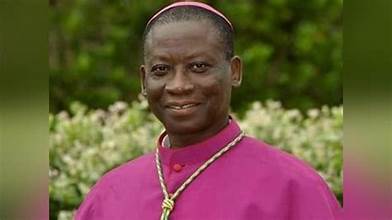
The Ghana Catholic Bishops’ Conference has cautioned political leaders against downplaying the national conversation on family values, warning that moral questions tied to identity and social structure cannot be treated as secondary concerns in Ghana’s development agenda.
In a pastoral and public statement issued on Friday, April 10, the Conference said recent comments by President John Dramani Mahama and Government Communications Minister Felix Kwakye Ofosu risk diminishing the importance of issues that many Ghanaians consider fundamental to the country’s moral and cultural fabric.
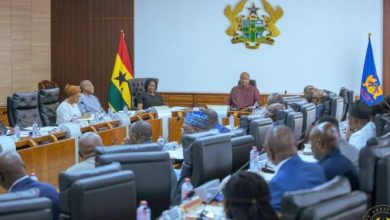
The bishops were responding to remarks attributed to President Mahama at the World Affairs Council, where LGBTQ+ matters were reportedly described as not among the most pressing national priorities.
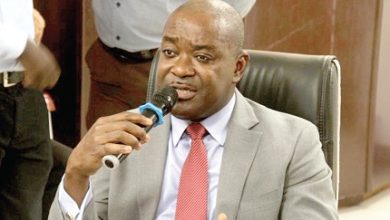
The Minister of State in Charge of Government Communications, in a subsequent commentary, characterised the issue as not a major concern for most Ghanaians and suggested the debate was a waste of time.
While acknowledging the need to prioritise urgent economic challenges, the bishops warned that such framing could create the impression that questions concerning human identity, family life and social continuity are inconsequential.
They argued that national development cannot be sustained by economic policy alone, stressing that values form what they described as the “invisible architecture” that underpins stable societies.
The statement rejected what it termed a false dichotomy between economic progress and moral responsibility, insisting that both must advance together. According to the Conference, global evidence shows that stable family structures contribute to improved education outcomes, lower crime rates and greater economic mobility.
“The family, in quiet ways, is a nation’s most efficient social welfare system,” the statement said, cautioning that weakening its moral foundation could undermine long-term development.
The bishops noted that debates surrounding marriage, sexuality and family continue to resonate deeply across Ghanaian society, cutting across religious, cultural and civic spaces. They maintained that for many citizens, such issues are not peripheral but central to national identity and social cohesion.
Reaffirming its position, the Conference defined family values as rooted in marriage between a man and a woman, oriented towards mutual support and the upbringing of children. It described the family as the primary institution for shaping character and civic responsibility.
At the same time, the bishops underscored the need to uphold the dignity of every individual, regardless of sexual orientation or identity. They condemned violence, hatred and unjust discrimination, describing such acts as moral failures that must not be tolerated.
They stressed that protecting human dignity and preserving the institution of the family are not mutually exclusive, but principles that must be upheld together to ensure a balanced and just society.
On the ongoing legislative process surrounding the Human Sexual Rights and Family Values Bill, the Conference urged President Mahama to honour his earlier public commitment to assent to the bill if it is duly passed by Parliament in line with constitutional procedures.
The bishops, however, acknowledged that certain provisions of the bill have generated concern and called for a careful scrutiny to ensure the final law reflects both the moral convictions of Ghanaians and the constitutional protection of fundamental rights.
They further called for a more measured and respectful national dialogue, warning that dismissive language could alienate sections of the population for whom the issue carries deep moral significance.
The Conference urged stakeholders, including government, Parliament, religious leaders, traditional authorities and civil society, to engage constructively and with mutual respect.
“The tone of our discourse matters as much as its content,” the statement noted, adding that national conversations should build trust rather than deepen division.
The bishops concluded by emphasising that Ghana stands at a critical point where economic ambition intersects with moral definition, and decisions taken now will shape the country’s future for generations.
They called for wisdom, justice and compassion in navigating the debate, while reaffirming the Church’s commitment to contributing to national discussions in a manner that promotes dialogue and understanding.