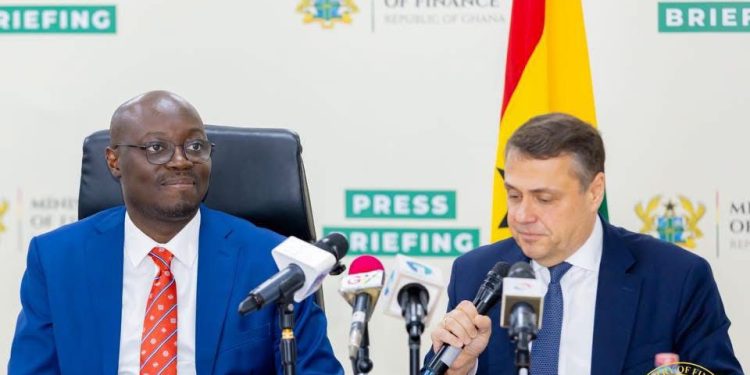
The International Monetary Fund (IMF) Executive Board has approved the sixth and final review of Ghana’s US$3 billion Extended Credit Facility (ECF) programme. The approval unlocks a final disbursement of approximately US$371 million and bringing the country’s three-year bailout programme to a successful conclusion.
It also marks the end of the IMF-supported programme launched in May 2023 to restore macroeconomic stability following Ghana’s 2022 economic crisis.
With the bailout programme completed, Ghana is now transitioning to a new 36-month Policy Coordination Instrument (PCI). This is a non-financing arrangement designed to help sustain reforms, reinforce policy credibility and support investor confidence.
However, the IMF has made clear that the end of the bailout does not signal the end of reforms. Instead, it outlines a roadmap of policy priorities aimed at consolidating Ghana’s economic recovery, safeguarding debt sustainability and strengthening long-term economic resilience.
Below are the 10 key reforms the IMF wants Ghana to prioritise in the post-bailout era.
1. Use PCI to sustain investor confidence
The IMF wants Ghana to use the new Policy Coordination Instrument as the anchor for its post-bailout reform agenda. Although the PCI does not provide financing, it serves as a strong signal to investors, development partners and credit rating agencies that Ghana remains committed to prudent macroeconomic management and structural reforms.
2. Strong revenue mobilisation
The Fund describes stronger domestic revenue mobilisation as paramount to Ghana’s long-term fiscal sustainability. It wants government to broaden the tax base, improve tax administration and increase domestic revenue collection to finance development spending while reducing reliance on borrowing.
3. Independence of BoG
According to the IMF, preserving monetary policy credibility depends on maintaining the operational independence of the Bank of Ghana (BoG). The Fund wants the central bank to permanently discontinue quasi-fiscal operations and complete the transfer of the domestic gold purchase programme to GoldBod.
4. BoG’s recapitalisation by 2032
While inflation has declined significantly under the programme, the IMF says Ghana must fulfil its commitment to recapitalise the Bank of Ghana by 2032. A stronger central bank balance sheet, it argues, is critical to safeguarding financial stability over the long term.
Ghana tourism promotion
5. Complete external debt restructuring
Although Ghana has reached agreements with official creditors and most commercial creditors, negotiations with a small group of external commercial creditors remain outstanding. The IMF wants these discussions concluded through good-faith negotiations to complete the country’s debt restructuring programme.
6. Oversight of energy and cocoa SOEs
The IMF continues to identify state-owned enterprises in the energy and cocoa sectors as significant fiscal risks. It is urging government to strengthen governance, improve financial oversight and implement reforms that prevent these entities from creating future debt pressures.
7. Keep public debt on track
The Fund wants fiscal policy to remain firmly anchored around Ghana’s objective of reducing public debt to 45% of GDP by 2034. Even as fiscal pressures ease, the IMF says government spending must remain consistent with long-term debt sustainability.
8. Address banking sector vulnerabilities
Despite improved resilience across the financial sector, the IMF says vulnerabilities remain in some state-owned and private banks, as well as specialised deposit-taking institutions. It recommends stronger supervision, timely corrective action and the completion of Ghana’s financial sector crisis management and resolution framework.
9. Expand Social Protection
The IMF says fiscal consolidation must be balanced with stronger social protection. It wants government to use improved fiscal performance to strengthen support for vulnerable households and ensure that economic recovery remains inclusive and supports private sector-led growth.
10. Governance and anti-corruption reforms
Finally, the IMF says stronger governance will be essential to sustaining investor confidence and public trust. It is calling for the effective implementation of the reformed asset declaration framework and the timely passage of the Conduct of Public Officials Bill currently before Parliament.