IEA kicks against renewal of Gold Fields Tarkwa mining lease
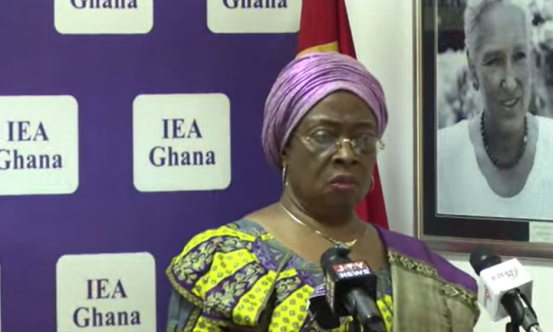
The Institute of Economic Affairs has intensified calls for Ghana to prioritise local ownership of its natural resources, opposing any renewal of Gold Fields’ lease for the Tarkwa mines as it nears expiration in 2027.
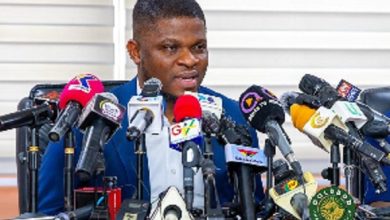
Speaking at a press conference in Accra, former Chief Justice and fellow of the IEA, Sophia Akuffo, backed calls for greater Ghanaian participation in the management of the country’s mineral resources, stressing the need for national control over strategic assets.
“The IEA considers the requested lease renewal or extension…It will be deeply inimical to Ghana’s long-term economic and strategic interests and therefore calls on the government to soundly reject this approach.
“Reject it decisively while prioritising a framework that secures meaningful Ghanaian ownership of the mine at Tarkwa,” she said
Her comments come amid growing debate over the future of the Tarkwa mines lease currently held by Gold Fields, which contributes significantly to the company’s global gold output.
The comments come after the Chief Executive Officer of Gold Fields Group, Mike Fraser, said the company remains committed to investing heavily in the Tarkwa Mine and has, since November 2025, applied for a lease extension for the mine for another 20 years.
Speaking during a visit to the Apinto Divisional Stool at Awudua in the Western Region, Mr. Fraser said Gold Fields’ Ghana operations contributed 25 percent of the company’s global production output last year, making the Tarkwa Mine a critical part of its operations globally.
But the IEA argues that Ghana must use the expiration of the lease as an opportunity to reset its approach to natural resource management and strengthen local participation in the mining sector.
The institute has warned against continued dependence on foreign operators in key sectors of the economy, insisting that Ghana’s mineral wealth should play a central role in driving national development and economic independence.
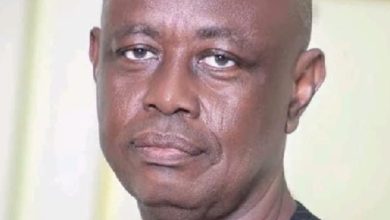
At the same press conference, Founder and Chairman of the IEA, Charles Mensa, criticised Ghana’s recurring reliance on the International Monetary Fund (IMF), noting that the country has sought IMF support about 17 times.
According to him, the repeated bailouts reflect structural weaknesses in the economy and the country’s failure to fully harness its natural resources for development.
“While we are selling our assets, we also have a huge low-hanging asset that we can tap into to pay our debts and to pay our way out into development, but those assets have been given away to foreign companies,” he said.
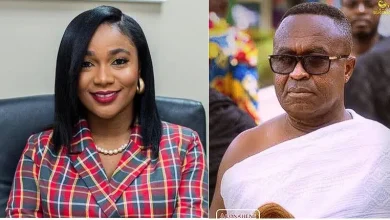
Former Speaker of Parliament, Aaron Mike Oquaye, also backed the campaign, arguing that Ghana should not renew leases that fail to prioritise national ownership and economic benefit.
According to him, many countries have successfully renegotiated resource contracts in favour of their national interests, adding that Ghana is in an even stronger position because the Tarkwa lease is close to expiration.
“The question is, should we bring them back to operate that which we know is our lifeblood? The answer is no, and it must be clearly no,” he said.
Prof. Oquaye further linked Ghana’s economic difficulties to decades of poor management of natural resources, insisting that the country must rethink how it handles its gold, bauxite, manganese, diamond, lithium, and oil resources.
The IEA maintains that empowering indigenous businesses and promoting Ghanaian ownership in strategic sectors will help the country retain more value from its natural resources and reduce dependence on external financial support.