The Komenda Sugar Factory: A Monument to Ghana’s Project Management Failure
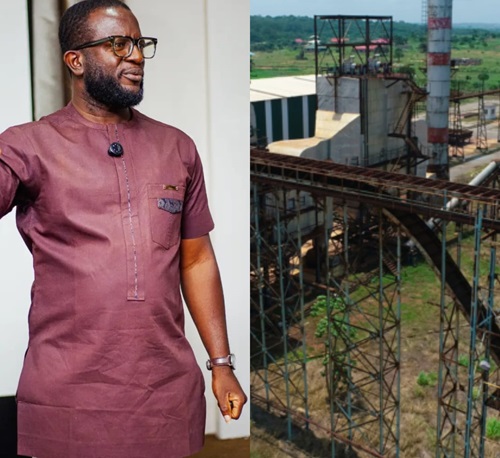
The image of the Komenda Sugar Factory standing idle after a reported investment of approximately US$35 million is more than a picture of an abandoned industrial facility. It is a painful symbol of one of Ghana’s most persistent development challenges: the inability to effectively manage, sustain, and account for major public projects.
For nearly a decade, a factory that was intended to transform agriculture, create jobs, stimulate industrialisation, and reduce sugar imports has remained largely inactive, while the nation continues to spend millions importing products it could potentially produce locally.
The tragedy of Komenda is not simply that a factory stopped operating. Businesses fail all over the world. Markets change, management makes mistakes, and unforeseen circumstances emerge. What distinguishes successful countries from struggling ones is not the absence of failure but the presence of accountability. In Ghana, failed public projects often disappear into silence. Reports are written, committees are formed, governments blame their predecessors, and eventually, the public moves on without anyone accepting responsibility.
This reflects a deeper crisis in project management, not merely in engineering or construction but in governance itself. Effective project management extends far beyond commissioning a building or cutting a ceremonial ribbon. It involves rigorous feasibility studies, stakeholder engagement, risk management, operational planning, financial sustainability, performance monitoring, and continuous oversight throughout the life of the project. The Komenda Sugar Factory demonstrates what happens when emphasis is placed on project completion rather than project success.
The consequences extend far beyond wasted public funds. Hundreds of farmers who anticipated a reliable market for sugarcane lost confidence. Employment opportunities that were expected to revitalise the Central Region never fully materialised. Local businesses that hoped to benefit from the factory’s operations saw their expectations disappear. Every abandoned public project weakens investor confidence because it signals institutional instability and uncertainty.
Perhaps the most disturbing aspect is the absence of accountability. In mature governance systems, projects of this magnitude would trigger comprehensive audits, parliamentary inquiries, professional reviews, and where negligence or misconduct is established, legal consequences. Accountability is not about political revenge; it is about protecting public resources and ensuring that future decision-makers learn from past failures. When no one is held responsible, failure becomes normalised, and the same mistakes are repeated across successive administrations.
The Komenda experience also exposes weaknesses in Ghana’s public sector project governance. Too often, projects are conceived around political cycles rather than long-term national development strategies. Governments are eager to commission new projects but less committed to ensuring that existing ones remain commercially viable. Industrial policy requires continuity beyond elections. Factories cannot operate on political promises alone; they require competent management, reliable raw material supply, access to markets, adequate financing, and consistent policy support.
This raises an uncomfortable but necessary question: Who owns public projects after they are commissioned? If no institution, ministry, board, or public official is ultimately accountable for their long-term success, then Ghana will continue to accumulate expensive monuments to poor planning rather than engines of economic transformation.
The Komenda Sugar Factory should serve as a national lesson rather than another forgotten headline. Ghana needs stronger project governance frameworks, independent post-project evaluations, performance-based management, transparent reporting, and clear mechanisms for assigning responsibility when projects fail. Every cedi borrowed or invested in public infrastructure represents the sacrifices of taxpayers and future generations. Those resources deserve competent stewardship.
Until accountability becomes an integral part of public administration, Ghana risks repeating the Komenda story across sectors—from manufacturing and energy to healthcare, transportation, and education. Development is not measured by the number of projects commissioned but by the number of projects that continue creating value years after political leaders have left office.
The abandoned Komenda Sugar Factory is, therefore, more than an idle industrial plant. It is a mirror reflecting the governance culture of a nation that must decide whether public investment will continue to be treated as political capital or as a sacred trust owed to its citizens. Only when accountability becomes non-negotiable will Ghana begin to transform ambitious projects into lasting national prosperity.
By Kwaku Owusu Boateng,
Otec fm, Kumasi
Chartersforum@gmail.com